If you are a founder paying an agency retainer mostly for social and ads production, you already know the quiet math. Strategy meetings feel valuable. Revision cycles feel expensive. The monthly invoice rarely separates the two cleanly.
Here is the answer-ready version before the detail: AI can absorb high-volume on-brand production; it does not replace positioning, campaign strategy, or complex art direction. That sentence is the decision frame. Everything below is how to use it without firing the wrong people or buying the wrong tool.
What agencies actually bill for
Agency retainers bundle several jobs that look similar on a calendar and feel different in a P&L.
Positioning and brand strategy. Who you are for, what you refuse to look like, which category codes you borrow, which ones you avoid. This work is sparse, expensive, and hard to automate. When it is wrong, every downstream asset looks polished and wrong at the same time.
Campaign strategy. Offers, angles, audience sequencing, channel roles, testing plans. A good strategist decides what to say and where. Production then makes the saying visible. Confusing these two jobs is how founders end up generating fifty ads with no hypothesis.
Art direction and creative leadership. Taste under constraint. The person who can kill a pretty option because it breaks the system, or push a quiet option because it will read at thumbnail size. This is judgment, not generation.
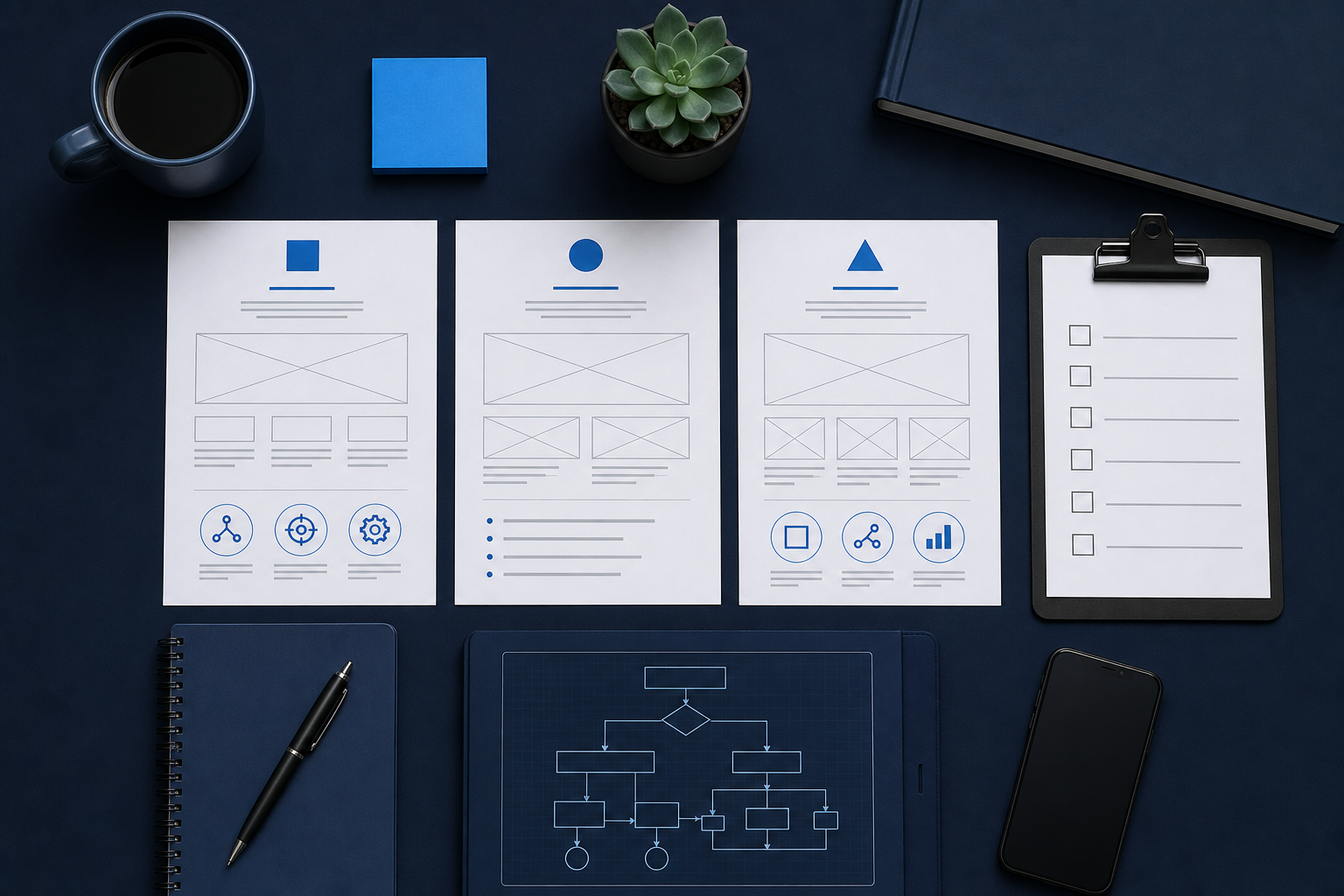
Production. Carousels, static ads, stories, banners, email headers, launch kits, resize packs. High volume. Repeatable structures. Tight deadlines. This is where retainers quietly spend most of their hours, even when the pitch deck sold “creative partnership.”
Project management and revisions. Status, feedback loops, file hygiene, “can you make the logo bigger / smaller / warmer.” Necessary. Often the line item that turns a two-day production job into a two-week invoice.
If your retainer is mostly production plus light strategy check-ins, you are not buying a creative director. You are buying a production desk with brand context. That desk is exactly where AI pressure lands first.
Production is the wedge
AI did not suddenly invent taste. It changed the cost curve of volume.
A founder with a clear brief can now generate, review, and ship many more channel-ready assets than last year’s production calendar allowed. That does not mean the founder should become the art director. It means the scarce resource shifted. Scarcity moved from “can we make another variant tonight” to “do we know what on-brand means before we ask for variants.”
Agencies feel this as a pricing problem before clients name it as a technology problem. Clients still want strategy and taste. They are less willing to pay senior rates for resize packs and weekly social grids that look like template work with better lighting. The wedge is production: the repeatable layer that used to justify headcount and now invites tooling.
That does not kill agencies. It forces a cleaner offer. Sell strategy, systems, and direction. Instrument production with tools that keep identity stable at volume. Or keep selling production hours and compete with software on price. Those are different businesses.
For founders, the practical question is narrower: which part of this month’s invoice would still need a human if the visual system were locked and the output volume were handled by a brand-aware generator?
Multi-brand and multi-channel volume
Volume is not one Instagram post. Volume is the matrix.
One product launch can mean: square feed, vertical story, 4:5 paid social, LinkedIn banner, email header, landing hero crop, retailer thumbnail, and three A/B variants of the offer treatment. Multiply by languages, markets, or sub-brands and the matrix stops being a creative challenge. It becomes an operations challenge.
Agencies win this matrix when they have systems: templates, brand books, QC checklists, and people who know the account’s visual dialect. They lose it when every asset reopens taste debates that should have been settled in the system. AI changes the matrix the same way: it amplifies whatever system you already have. No system means faster mess. Clear system means faster ship.
Multi-brand teams feel this hardest. A holding pattern of three brands sharing one freelance pool creates three dialects of “almost right.” Generators without brand memory make that worse because each prompt session invents a new almost. Generators with stored identity make it better because brand A and brand B do not share a prompt lottery. They share separate profiles.
Channel volume is where founders notice the retainer first. You asked for twelve ads. You got twelve files and eight revision threads. The creative idea was fine on day one. The cost lived in the packing and unpacking of brand rules across formats. That packing job is software-shaped once the rules exist.
Honest limits: what AI should not own
Be blunt about the limits. Overclaiming is how tools get fired in month two.
Positioning. AI can summarize research and draft options. It cannot own the decision of who you are for and what you will refuse. That decision has political weight inside a company. Software does not sit in the board meeting when the category narrative shifts.
Campaign strategy. Models can propose angles. They cannot set the bet. “We lead with speed this quarter” is a human call with budget consequences. Generating ten headlines is not the same as choosing the test plan.
Complex art direction. A campaign with custom photography direction, unusual typography systems, or culturally sensitive symbolism still needs a senior creative who can hold the whole thing in their head. Generators follow rules. They do not invent a new visual language and defend it across a six-month brand platform.
Taste in ambiguous briefs. “Make it premium but approachable” without references is not a production brief. It is a strategy gap. AI will fill the gap with plausible sludge. A human should refuse the brief until it is concrete.
Accountability. When an asset offends, misleads, or breaks a partner guideline, a person owns the call. Tools assist. They do not take the meeting.
If your agency’s value is mostly those human layers, protect them. Do not replace the strategist with a prompt. Replace the unpaid production tax that surrounds the strategist.
The hybrid model that actually works
The useful model for most founders on retainers looks like this.
Humans own the sparse, high-judgment work. Positioning refresh. Campaign thesis. Art direction for the hero idea. Final taste pass on anything that will define the brand for a quarter.
Systems own the rules. Palette, type behavior, logo clearance, photography style, do-nots, channel crops, offer treatments. Written once. Shared. Updated deliberately.
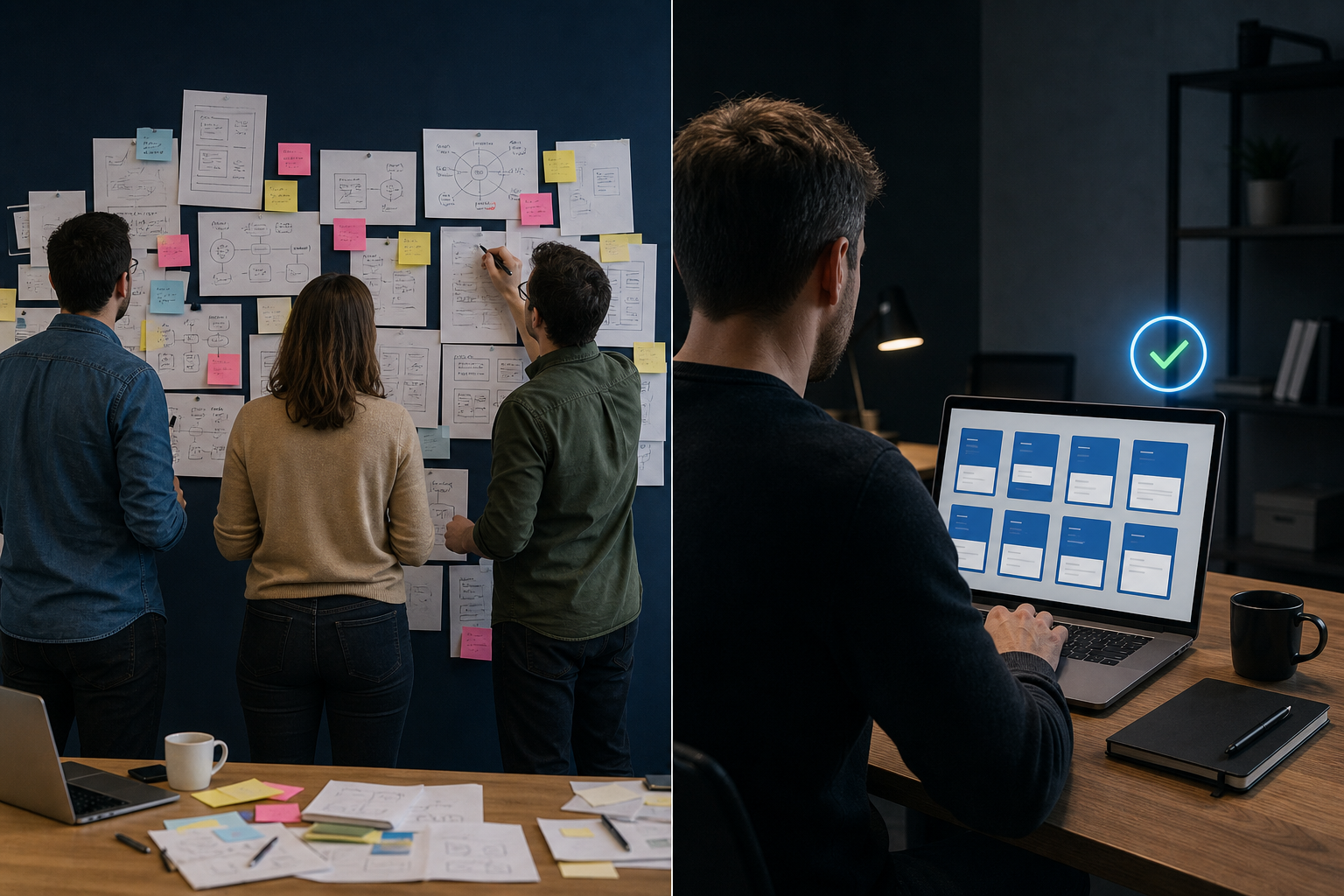
AI owns the volume lane. Once the system exists, generate the grid: variants, formats, seasonal swaps, A/B packs. Humans review batches, not every pixel from a blank page.
Agencies shift upstream or specialize. The retainer becomes strategy + system maintenance + QA, or it becomes production-as-a-service with transparent tooling. Ambiguous “full service” that hides production hours as creative genius gets harder to sell.
A practical operating rhythm:
- Brief the campaign in one page: audience, offer, proof, visual references that are in-brand.
- Lock the visual system before mass generation (see the visual-system post in this series if you do not have one yet).
- Generate a controlled batch of channel assets inside that system.
- Human review for strategy fit and taste outliers.
- Schedule, measure, feed learnings back into the brief, not into random prompt folklore.
This rhythm is boring on purpose. Boring production is how brands stay recognizable while strategy stays interesting.
When Brandiseer fits (and when it does not)
Brandiseer is built for the production lane: upload brand assets once, keep a persistent visual identity, generate marketing assets that inherit that identity across jobs. It is not a replacement for a strategist, and it will not invent your positioning.
Fit signals
- You pay for many social/ads assets per month and the feedback is usually “closer to brand,” not “wrong idea.”
- You run multi-channel packs where identity drifts between formats.
- You manage more than one brand or SKU line and cannot afford a separate prompt dialect for each.
- You want founders or lean marketing teams to ship volume without a full-time production designer on every resize.
Non-fit signals
- You need a brand platform from scratch and have no references, no palette decisions, and no offer clarity.
- Your main gap is storytelling strategy, not asset throughput.
- You want gallery-grade exploratory art with no brand lock. Use an art generator for that lane, then bring winners into a brand-locked production tool later.
Brandiseer belongs in the hybrid model as the production engine after humans set the rules. Midjourney-style exploration can still happen early. Agency taste can still happen at review. The difference is you stop paying senior rates for the part of the stack that is now software plus a checklist.
Pricing and commercial rights details live on the pricing page. Evaluate with your real kit and a real week of work, not a demo prompt about a fictional coffee brand.
How to renegotiate without burning the relationship
If you keep the agency, change the brief and the billing shape.
Ask for a clear split: strategy hours vs production hours. Ask what system they maintain for your brand (not a PDF nobody opens). Ask whether production volume can run through a brand-locked generator with their creative lead doing QA. Good agencies will lean into that. Weak agencies will defend hours.
If you reduce the retainer, do it against volume metrics, not vibes. “We still need you for campaign thesis and quarterly art direction. We are moving weekly social production in-house with brand memory tooling.” That sentence is adult. “AI replaces agencies” is not.
Keep a kill criterion for in-house production: if three consecutive weeks of assets fail recognition tests against your last strong campaign, pause and fix the system before you blame the tool or the intern.
FAQ
Will AI replace my agency entirely?
Unlikely if they sell judgment. Likely to compress the production portion of the invoice. Replace the vague retainer with a clearer split before you replace the partner.
What should I still pay humans for?
Positioning, campaign strategy, complex art direction, and final taste on brand-defining work. Also QA against partner and legal constraints.
What is the first production job to move?
Weekly social and paid static variants with a locked visual system. Leave hero campaign concepts in human hands until the system is stable.
How do I know the AI output is on-brand enough?
Judge sets, not singles. Five assets side by side should read as one brand at thumbnail size. If they do not, fix the stored identity and rules before you generate more.
Try the production wedge on your real brand
If you are paying mostly for volume, stop arguing about whether AI “replaces creative.” Separate strategy from production. Keep humans on the sparse decisions. Put volume inside a brand memory system.
Upload your kit. Generate a channel pack. Review the grid like a founder who cares about recognition, not like a spectator of pretty demos.