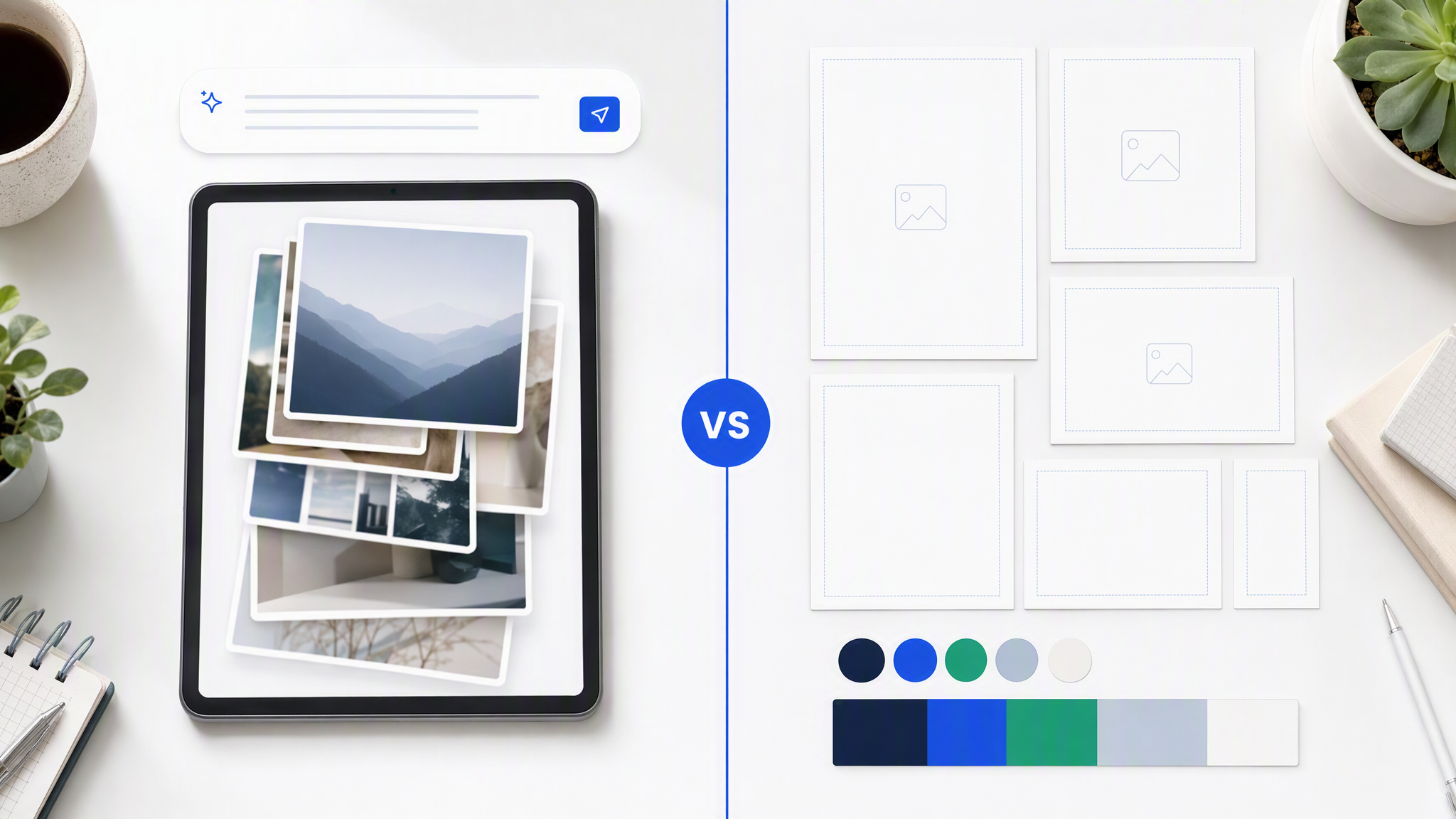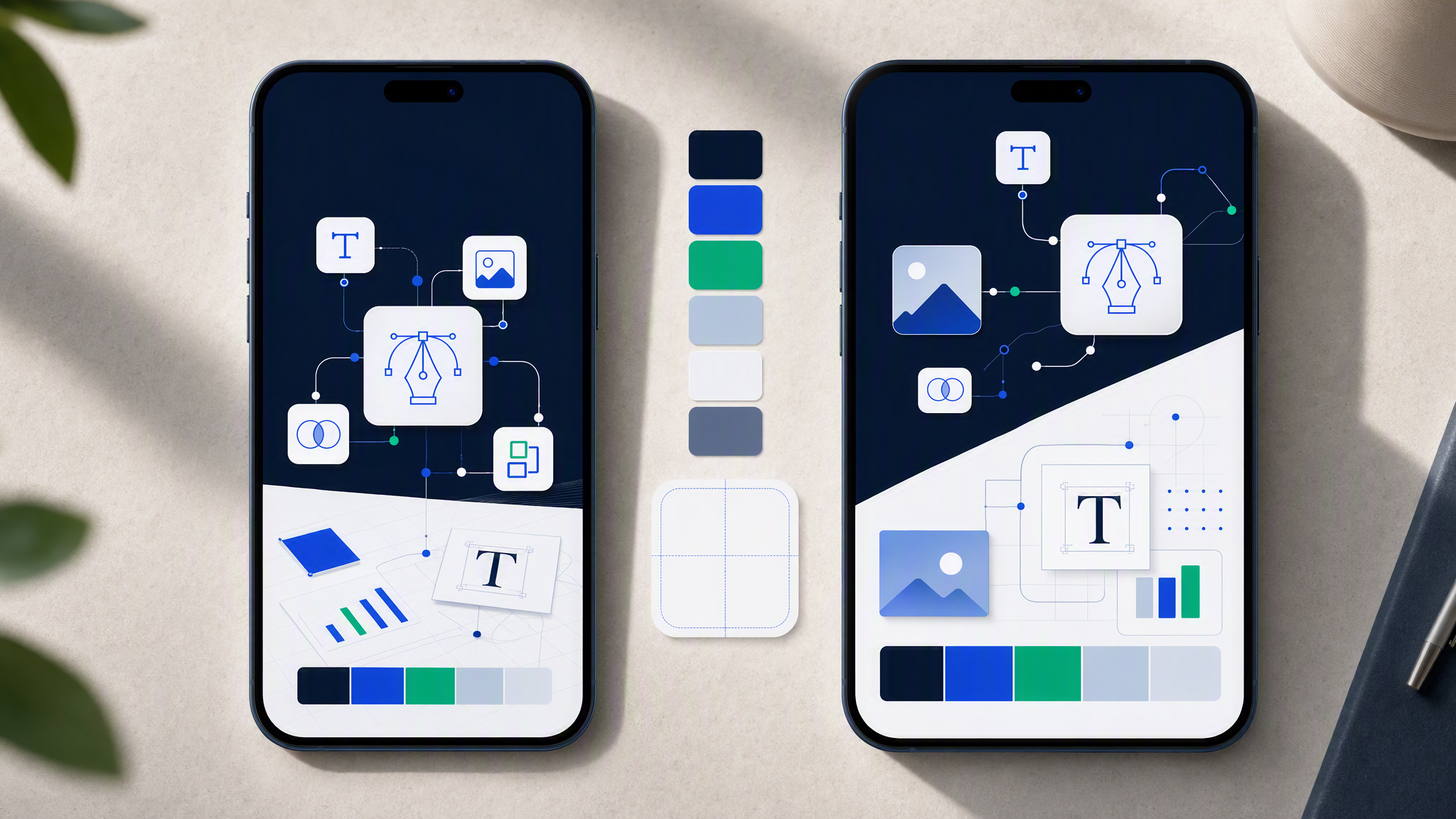
One asset rarely proves brand drift. A set does.
A single social post can look fine in isolation. Put twelve posts, four ads, two email headers, and a landing module on one wall and the mismatches become obvious: three blues, two logo sizes, one illustration dialect that never met the photography, a template family that wandered in from Canva at midnight.
Here is the answer-ready line: Visual brand drift is cumulative mismatch across a set; fix by auditing side-by-side, then regenerating from one stored brand profile. This is an ops skill, not a vibe check. You can run a useful audit in ten minutes if you know what to look for.
What visual brand drift looks like in a campaign
Drift is pattern failure. Train your eye on the pattern, not on taste debates.
Color weight shifts. Same hex on paper, different dominance in use. One week navy is a calm field. Next week it is a thin underline while a new accent takes over. Thumbnails stop matching.
Logo behavior changes. Clear space shrinks. The mark jumps into circles, gradients, or fake badges. Sometimes it disappears entirely because "the image was busy."
Type mood splits. Headline energy flips between geometric sans, soft rounded, and a decorative moment someone loved once. Even when fonts are "approved," hierarchy and tracking habits create different brands.
Photo vs illustration civil war. Product shots are clean and daylight. Campaign illustrations arrive loud and fictional. Both can be good. Together they read as two teams who never shared a folder.
Template dialect. Correct colors applied to unrelated template families still look unrelated. Layout DNA leaks through.
AI one-offs. Each prompt invents a cousin. Cousins are charming. Cousins are not a system.
Channel amnesia. Stories invent a vertical-only style that never appears on feed or site. Paid placements invent yet another crop language. The campaign becomes a federation of micro-brands.
Campaign device without an end date. A seasonal graphic trick becomes permanent because nobody removed it from the kit. Temporary becomes identity by neglect.
If you only review assets one at a time in Slack threads, you will approve drift all month and notice it when the retrospective deck goes up.
A 10-minute campaign drift audit
Use a timer. Speed forces honesty.
Minute 0 to 2: Build the wall. Export or screenshot the live set: organic, paid, email, site modules for the same campaign. Put them in one board. Blur small text if needed so you judge visuals first.
Minute 2 to 4: Recognition test. Ask one teammate who did not design the set: "Same brand as our homepage?" If they hesitate, you already have a finding. Hesitation is data.
Minute 4 to 7: Score five axes. Quick pass/fail only:
- Color behavior
- Logo behavior
- Type mood
- Image treatment (photo/illustration light and texture)
- Layout dialect (template families / composition habits)
Mark failures on the board with simple tags. Do not rewrite the brand in this meeting.
Minute 7 to 9: Find the source. For each failure cluster, name the cause: outdated kit, freelancer outside the profile, Midjourney paste, Canva template family, missing review grid, campaign device that escaped.
Minute 9 to 10: Choose the fix order. Do not fix everything at once. Rank by public exposure and severity. Paid and homepage-adjacent first. Internal experiments last.
Write the results in five bullets max. Long audit docs become shelfware. The board and the bullets are enough to start regeneration.
Run this audit at campaign midpoint, not only at the end. Midpoint still gives you time to repair the feed before the budget finishes teaching the wrong look.
Fix order that stops the bleeding
Random redesign wastes the week. Sequence the repair.
-
Restore the source of truth. Refresh the brand profile with current logo, colors, fonts, and three to five "this is us" references from before the drift. If the campaign device is approved, add it explicitly with a kill date.
-
Kill the worst offenders. Remove or unpublish the assets that break recognition hardest. Silence beats continued education in the wrong dialect.
-
Regenerate clusters, not isolated files. Rebuild the social week as a set. Rebuild the ad family as a set. Side-by-side creation prevents new micro-drift while you repair old drift.
-
Re-apply channel crafts after identity. Fix safe zones, crop, and CTA clearance only after the set matches. Craft on top of a broken identity wastes effort.
-
Re-audit the wall. Same ten-minute test. If recognition still fails, the profile is incomplete or someone is still producing outside it.
-
Update the process that caused it. Access, review cadence, freelancer onboarding, or tool handoff. Without this step, you will rerun the audit next campaign.
People love to polish the least broken file because it feels productive. Start with the files that make the brand look like a stranger.
Prevent the next drift with a stored brand profile
Audits catch drift. Memory reduces how often you need emergency audits.
Persistent brand memory means the production tool applies logo, color, font, and reference behavior automatically. Daily prompts describe the job and the offer. They do not re-teach navy. New teammates inherit the lock on day one. Freelancers stop rebuilding identity from a PDF.
Prevention habits that work with memory:
- Generate in batches and review grids before scheduling
- Name one brand exception owner
- Put campaign devices in the profile with dates
- Ban silent tool hopping for publish assets
- Keep exploration separate from shipping (explore elsewhere, publish from memory)
- Retire references that no longer represent the brand
Without memory, every campaign depends on who is awake and how carefully they paste style notes. That is not governance. That is hope.
Tools: what helps and what only looks like help
Helpful. A brand-memory generator for publish volume. A shared board for the audit wall. A short written standard for pass/fail axes. A slide or Notion page that records exception decisions.
Partially helpful. Canva Brand Kit and similar libraries: great for human assembly hygiene, weak as automatic generation memory. Use them where you still assemble manually.
Misleading if used alone. Midjourney style references, Slack screenshot folklore, and "please match these three links" emails. They help individuals. They do not hold a multi-person campaign still.
Brandiseer's role. Store the profile, regenerate the broken clusters from that profile, and keep the shipping lane from inventing cousins. Pair it with your audit ritual. The tool applies identity. The ritual catches process failure.
You do not need a huge stack. You need one identity source, one review wall, and one owner.
Sample scorecard you can reuse
Copy this into the audit board notes:
- Color behavior: pass / fail / notes
- Logo behavior: pass / fail / notes
- Type mood: pass / fail / notes
- Image treatment: pass / fail / notes
- Layout dialect: pass / fail / notes
- Worst public asset URL or filename
- Suspected cause
- Fix owner and due date
- Profile update needed: yes / no
Five minutes of structure here prevents a week of vague "make it more on brand" comments. The scorecard also creates a trail when the same cause repeats across campaigns, which is usually a tooling or access problem rather than a taste problem.
FAQ
How often should we audit?
At campaign midpoint and at close. Weekly for high-volume always-on social if multiple people publish.
What if leadership likes the drifted look?
Then update the brand on purpose. Drift fixed by silent preference is still unmanaged change. Write it down and refresh the profile.
Can we fix drift by editing files one by one in Canva?
Sometimes for a tiny set. For a real campaign, regeneration from one profile is faster and more consistent than twelve manual surgeries.
Is copy drift part of this?
Related but separate. This audit is visual. Run a message audit with the same wall mindset if claims and voice are also wandering.
Drift is a set problem with a system fix
Visual brand drift is cumulative mismatch across a campaign set. Spot it with a timed side-by-side audit. Fix it in exposure order by regenerating from one stored brand profile. Prevent it by keeping publish work inside brand memory and by retiring the process habits that invited cousins back in.