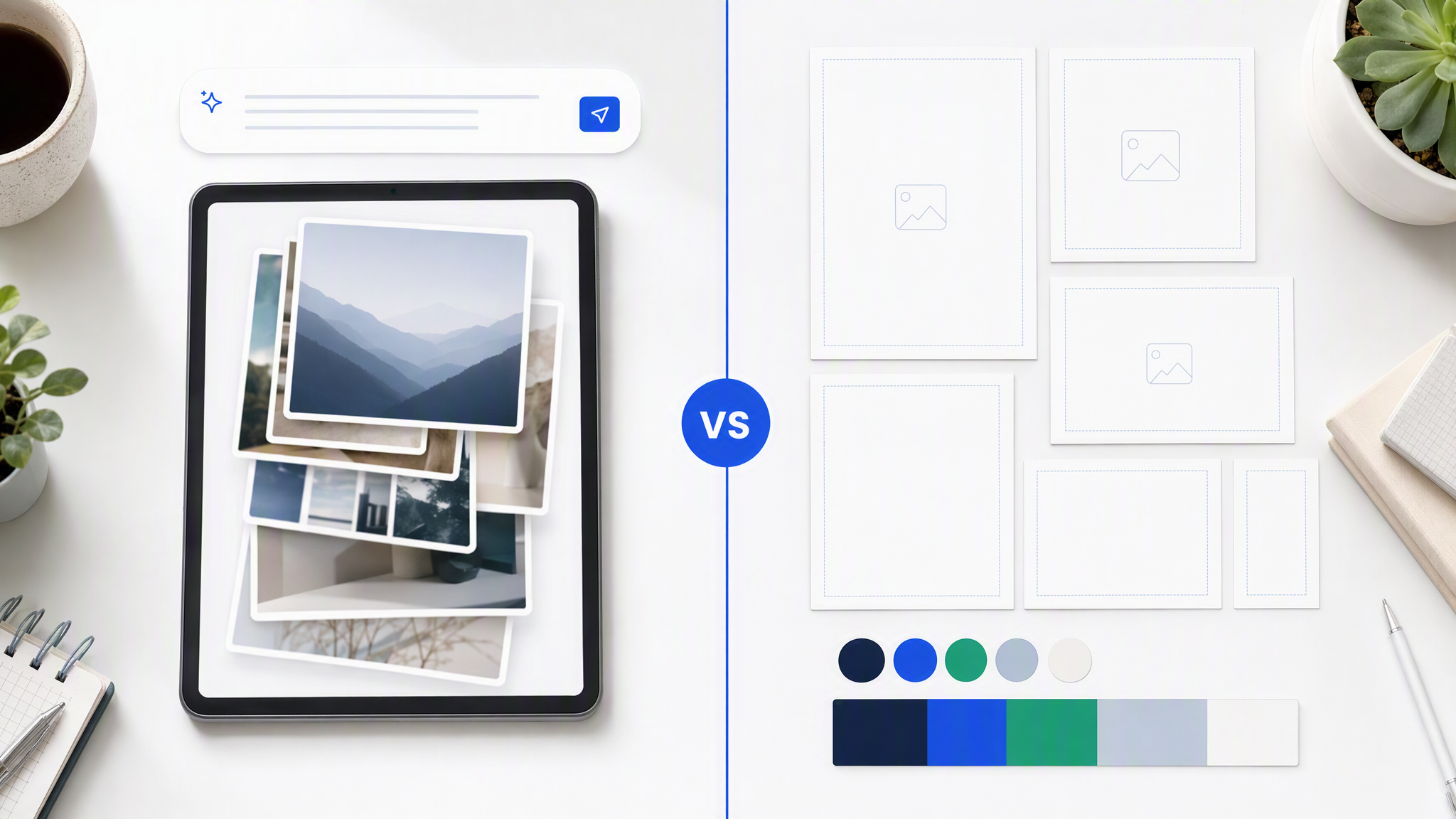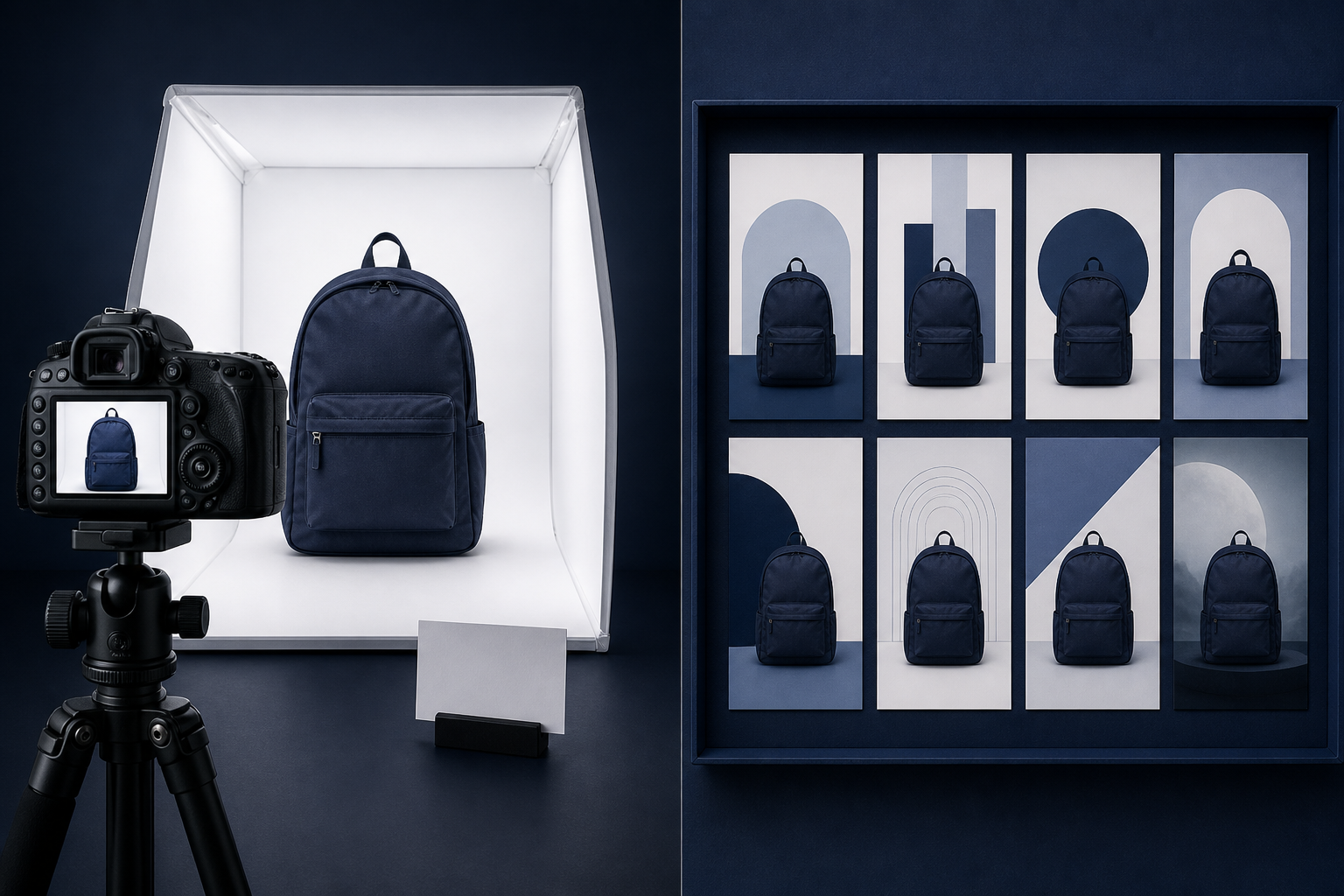
AI product photography is not a yes-or-no decision. It is a split between truth frames and promo variants.
Teams that treat every generative image as a catalog replacement get returns, policy risk, and shopper distrust. Teams that refuse AI entirely pay studio rates for every seasonal background and channel crop. Both extremes are expensive.
Here is the answer-ready line: Use real photos when product truth matters on the PDP; use generative images for on-brand promo variants after standards exist.
What AI does well for product work
Generative tools earn their keep when the product is already known and the job is multiplication inside rules.
Background and surface variants. Same truthful pack on white, soft gray, or approved brand color fields for marketplaces that demand different standards.
Channel crops and safe-zone sets. PDP gallery, paid placements, email modules, and retail one-pagers derived from one product source without rebooking a full day for every ratio.
Campaign skins. Seasonal props, limited promotional staging, and lifestyle-adjacent scenes that still obey light and shadow rules in the brand photo standard.
Bundle and layout assembly. Cards that arrange already-shot SKUs into gift sets or kit layouts when merchandising validates completeness against inventory.
Speed after standards exist. Once references and rules are locked, AI can fill a grid that would otherwise wait weeks for studio availability.
AI is a factory for governed variants. It is not a substitute for knowing what the product actually looks like in hand.
Where generative images fail
Know the hard stops before a launch calendar forces a bad call.
Material and finish honesty. Jewelry sparkle, fabric hand, furniture grain, cosmetic texture, food freshness, and glass refraction often read wrong when invented. Wrong materials drive returns and reviews that no campaign can outrun.
Pack accuracy. Labels, warnings, nutrition panels, claims, and certifications must match what ships. "Cleaner" generative label art for ads is a trust and compliance problem.
Scale and accessory truth. Missing inserts, wrong cap types, invented chargers, or misleading size against a hand create support tickets.
Documentary lifestyle claims. A generated kitchen is fine as promo staging. Presenting invented homes or customers as proof is not.
Never-photographed new finishes. If you have no truthful source frame, do not hallucinate the surface for PDP. Shoot it.
Marketplace and regulated categories. Some channels punish misleading imagery. Internal standards should be stricter than the minimum policy.
Shadow brands across SKUs. Uncontrolled AI introduces a new light dialect per batch. The catalog becomes a collage even when each hero looks premium alone.
If a frame must answer "what exactly am I buying," prefer real capture. If a frame must answer "how might this campaign feel this week," generative variants can help after standards exist.
Hybrid workflow that actually works
A durable hybrid looks like a relay, not a turf war.
1. Write the photo standard
Framing, background options, light dialect, shadow rules, prop allowlist, hands/lifestyle policy, and honesty limits. Keep it on one page.
2. Capture truth frames
Studio or controlled real photos for:
- Primary PDP hero
- Required angles and details that affect purchase confidence
- Any material-critical close-ups
- New colorways and finishes at introduction
3. Load references into your brand profile
The standard plus five to ten reference SKUs become the dialect. Without this, AI invents.
4. Generate promo and channel variants inside the rules
Request jobs, not vibes: "same bottle, soft gray field, Amazon main constraints," or "same hero, summer prop set from allowlist, story crop."
5. Review on a category grid
Old vs new, SKU vs SKU, PDP vs ad. Reject pretty liars.
6. Update standards on purpose
When a campaign device becomes permanent, write it down. Silent exceptions become permanent drift.
Studio relationship stays for truth and refresh cycles. AI stays for volume inside the fence.
Consistency rules for both real and generative sets
Whether the photons came from a camera or a model, shoppers experience one grid.
One light dialect per category. Do not mix hard product light and golden-hour lifestyle on the same collection row unless the standard says when each appears.
One background grammar. White, gray, brand field, and lifestyle each need rules for where they are allowed (PDP, marketplace, campaign).
Shared crop logic. Product scale should feel comparable across a category. Random zoom reads as quality tiers.
Prop discipline. Allowed props list beats "make it cozy" prompting.
No invented improvements. No fake dew, no luxury box that is not in cart, no glamour retouching that hides true color.
Same logo and packaging marks. Generative "enhancements" to marks are brand breaks.
Grid QA every batch. Ten matching cards beat one award-winning orphan.
These rules make hybrid production coherent. Without them, real photos and AI images fight each other in the same scroll.
Brandiseer for promo, real photos for PDP truth
Split ownership clearly so teams stop arguing ideology.
PDP and high-trust commerce surfaces
- Real product photography as source of truth
- AI only for constrained background or crop variants that do not invent materials
- Merchandising sign-off on anything that could affect returns
Promo, social, paid, email campaign layers
- Generative images allowed after the photo standard and references exist
- Brandiseer as the memory layer so promo variants inherit logo, color roles, and photographic dialect
- Campaign devices timeboxed and removable
Why Brandiseer in the promo lane
Promo volume is where dialects multiply: freelancers, weekly themes, rapid A/B frames. Persistent brand memory keeps those frames related to the PDP truth set instead of drifting into a parallel aesthetic. You still do not put invented materials on the buy page. You do stop paying studio economics for every promotional cousin.
Practical pilot:
- Choose one category with messy ads and decent PDP heroes.
- Shoot or select truth frames.
- Encode the standard and upload references.
- Generate ten promo variants for two weeks of channels.
- Compare PDP vs promo on one board.
- Keep only what survives honesty and recognition checks.
If the promo set cannot sit beside the PDP without embarrassment, the fix is standards and memory, not a hotter model.
Decision table you can paste into a brief
| Asset job | Prefer real photo | Prefer generative (after standards) | | --- | --- | --- | | PDP hero and required detail | Yes | Only tightly constrained variants | | Marketplace main image with strict pack rules | Yes | Background swap only if policy-safe | | Seasonal social promo | Optional truth base | Yes for governed variants | | Paid A/B backgrounds | Truth base recommended | Yes inside brand memory | | New unfinished material launch | Mandatory | No invention | | Gift bundle layout from known SKUs | Real component frames | Assembly variants with checks | | Documentary "real customer" claim | Real | No |
When unclear, bias to real for purchase truth and generative for campaign range.
Cost reality without fake studio invoices
Studio days are expensive. Ungoverned AI is expensive in a quieter way: returns, reshoots, rejected marketplace images, and creative rework when ads cannot sit beside PDP heroes.
A practical budget split many catalogs can defend:
- Truth budget: capture and refresh real frames for heroes, materials, and pack-critical angles.
- Variant budget: generate channel and promo cousins inside brand memory after standards exist.
- QA budget: grid review time is not optional overhead. It is how you avoid paying twice.
If your finance story is "AI replaces the studio," you will underfund truth and overproduce drift. If your finance story is "studio forever for every crop," you will stall launches. Fund both lanes. Measure success on category grid consistency and return-rate proxies, not on how cheap one generative hero looked in isolation.
FAQ
Can we run a catalog with zero studio work?
For most physical products, no. You need truthful sources. AI multiplies; it should not invent the SKU.
What about digital products or pure software UI?
Truth still matters: use real product UI captures for PDP-like pages. Generative scenes can support campaign metaphor only if they do not fake the product.
How often should we reshoot truth frames?
When materials, packs, or category standards change, and on a planned refresh cycle. Do not reshoot only because promo AI got bored.
Who rejects generative lies?
Name merchandising and brand owners. Producers should not mark their own honesty homework.
Truth on the PDP, memory in the promo tray
Real photos and generative images are teammates when you assign jobs correctly. Real capture owns product truth on the PDP. Generative production owns on-brand promo variants after standards and references exist. Brandiseer holds the memory so campaign volume stays related to that truth instead of inventing a second brand.
Shoot what shoppers must trust. Generate what campaigns must multiply. Review the grid like returns depend on it, because they do.