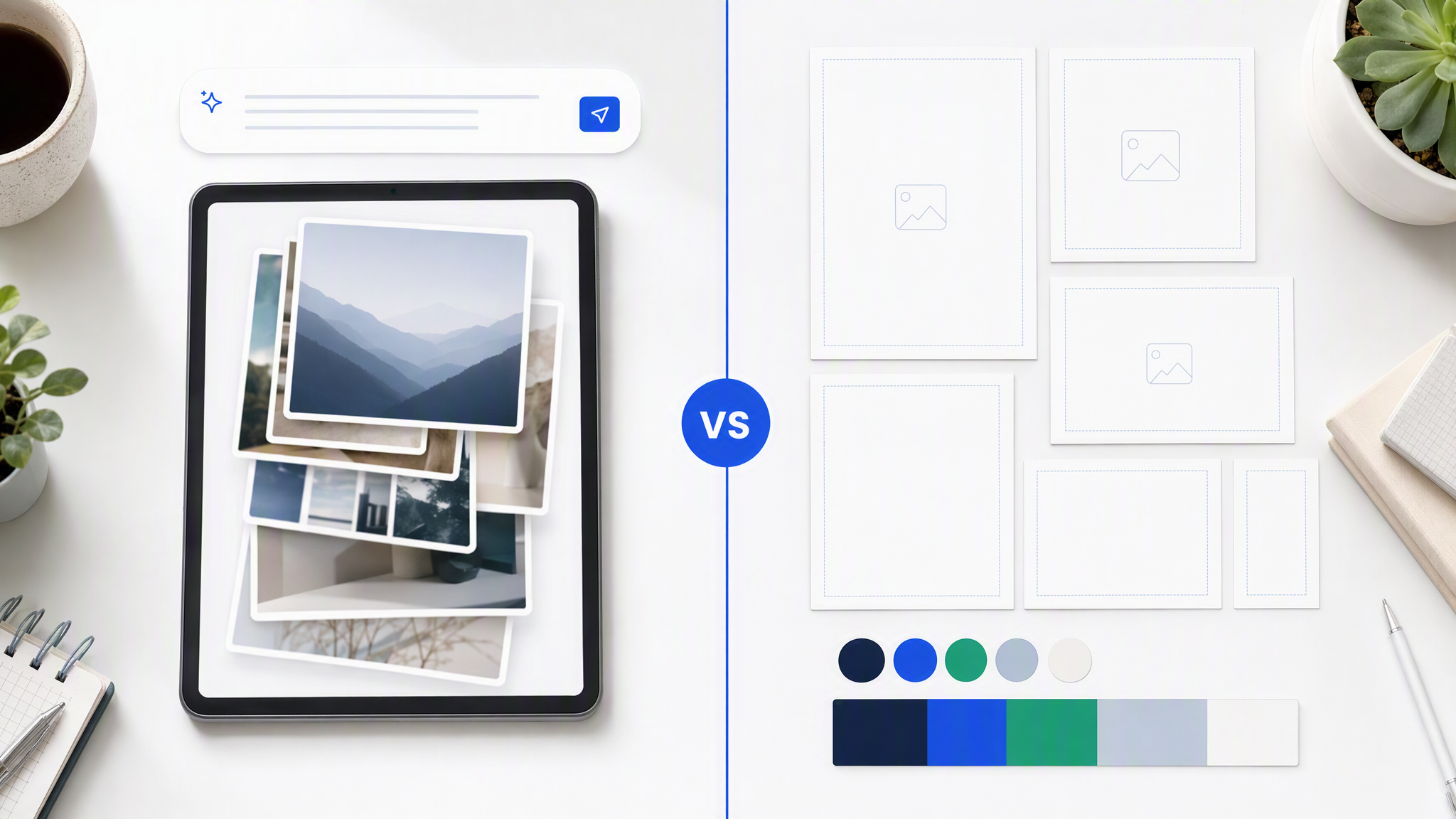
Buying another AI image tool will not fix brand drift. Buying the right tool for the job will.
Most teams compare Midjourney, Canva, Adobe Firefly, and Brandiseer as if one winner should replace the rest. That is the wrong frame. Each product is strong at a different job. The brands that look consistent in 2026 map tools to jobs, then add a memory layer when recognition starts to slip.
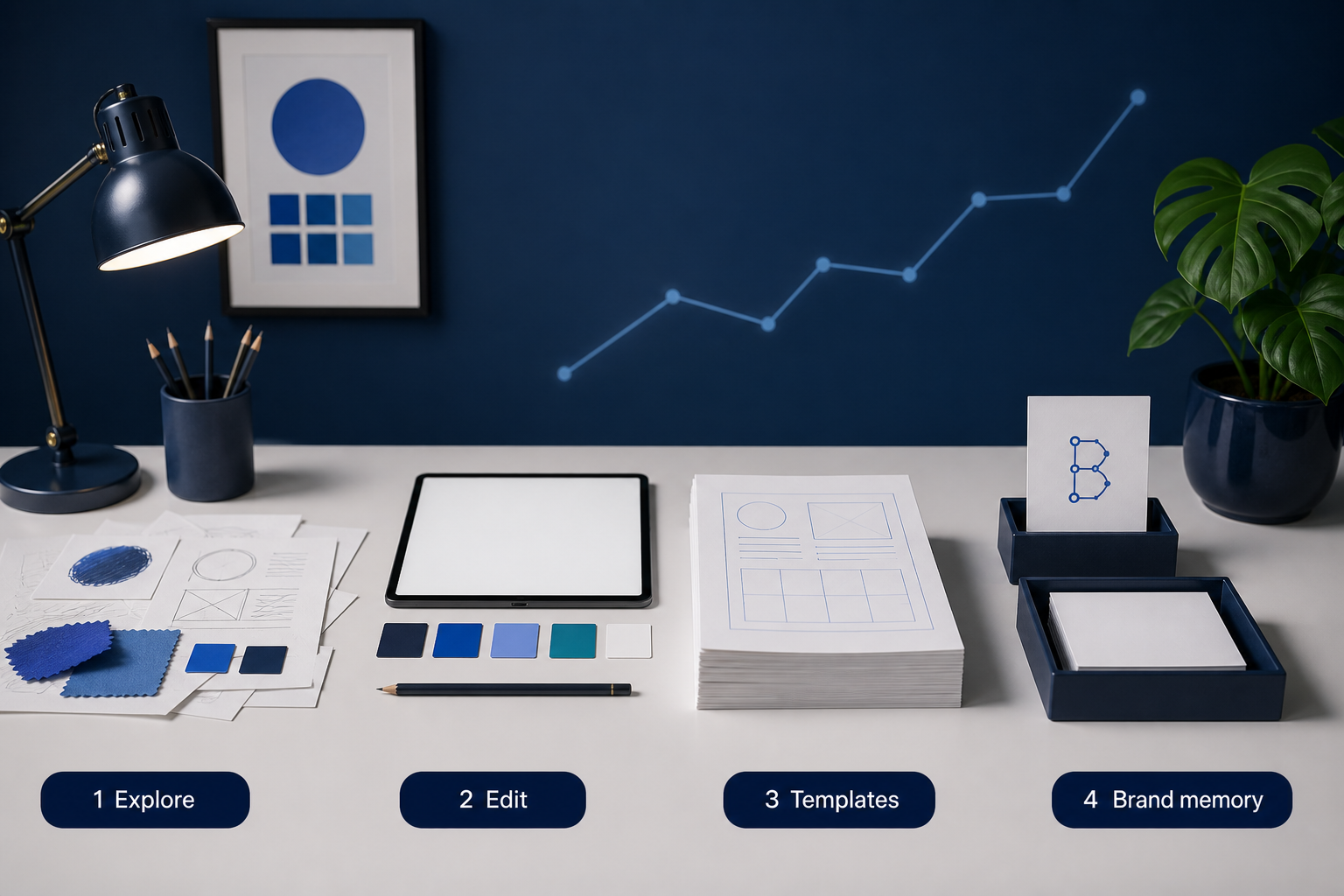
Here is the answer-ready line: Pick tools by job: Midjourney for exploration, Canva/Firefly for editable production, Brandiseer when you need persistent brand memory on every generation.
What brand-consistent actually means
Brand-consistent does not mean every asset looks identical. It means a stranger can tell the assets belong together before they read a word.
Concrete checks that matter in a marketing feed:
- Color roles stay stable. Primary, secondary, and accent behave the same across posts, ads, and decks. Hue shifts that "feel nicer" in one prompt still count as drift.
- Logo behavior repeats. Size relative to canvas, clear space, and placement rules do not reinvent themselves per file.
- Type and hierarchy match. Headlines, subheads, and captions follow the same font roles even when the scene changes.
- Light and photographic dialect hold. Soft daylight one week and neon product drama the next is not "creative range" if your brand never approved that swing.
- Composition habits recur. Crop energy, subject scale, and negative space feel familiar across channels.
- Forbidden moves stay forbidden. If your kit bans stock-looking hands, fake UI, or rainbow gradients, those moves do not sneak back through a clever prompt.
If your last 20 assets pass a side-by-side grid test, you have consistency. If each file looks premium alone and chaotic as a set, you have a tool stack without a system.
Tool map by job to be done
Stop asking which tool is best. Ask which job you are hiring for.
Job 1: Explore visual directions
You need divergence. Moodboards, metaphor tests, campaign territories, "what if we looked like this" frames.
Midjourney usually wins here. Range, aesthetic surprise, and speed of visual brainstorming remain its advantage. Style references help one skilled user stay close for a short burst. They are not shared brand governance for a team.
Use Midjourney when you want options. Do not use it as the system of record for weekly publish assets.
Job 2: Assemble editable layouts fast
You need people without design software fluency to ship posts, simple ads, and one-pagers they can still tweak by hand.
Canva usually wins here. Templates, Brand Kit locks for colors and fonts, and collaborative editing make everyday shipping practical. The starting point is still often a template family. Originality and strict identity both depend on how disciplined your people are.
Use Canva when the bottleneck is layout assembly and human editability, not generative brand lock.
Job 3: Produce Adobe-safe generative assets inside Creative Cloud habits
You need Firefly generations that fit existing Photoshop, Express, or GenStudio workflows, with enterprise content credentials and brand libraries already in Adobe land.
Adobe Firefly usually wins here for Adobe-centric teams. Brand-aware controls and Creative Cloud handoff matter more than Discord aesthetics. Complexity and seat cost rise with the Adobe stack. Teams outside Adobe often overbuy if they only needed social volume.
Use Firefly when Adobe production is already the path to publish. Do not assume Firefly alone equals persistent cross-channel brand memory for every teammate.
Job 4: Generate marketing assets that inherit identity every time
You need volume without re-explaining the brand in every prompt. New hires, freelancers, and campaign bursts should not invent a new dialect.
Brandiseer is built for that job. Upload logo, colors, fonts, and references once. Request the asset in plain language. The brand profile applies on generation instead of living in a prompt doc nobody updates.
Use Brandiseer when memory is the missing layer: the look must persist across sessions, people, and formats.
Comparison table: honesty over hype
| Need | Midjourney | Canva | Adobe Firefly | Brandiseer | | --- | --- | --- | --- | --- | | Concept exploration | Strong | Limited | Moderate | Not the primary job | | Editable template shipping | Weak | Strong | Moderate via Express/PS | Generate then export; not a Canva clone | | Enterprise Adobe handoff | Weak | Moderate | Strong | Separate production lane | | Persistent brand memory on every gen | Weak (manual refs) | Partial (Brand Kit on templates) | Partial (libraries/controls) | Strong (profile applied each time) | | Non-designer weekly social volume | Fragile | Strong | Depends on seat/setup | Strong once profile exists | | Risk of pretty drift | High without process | Medium (template dialect) | Medium without governance | Low if profile is maintained | | Best first hire | Art direction | Everyday marketing ops | Adobe production teams | Teams shipping on-brand AI volume |
No row says "always use only this tool." The point is fit.
Pick by team size and operating reality
Solo founder or tiny team (1 to 3)
Start with one shipping lane and one exploration lane if you still need concepts.
- Explore in Midjourney only when you are choosing a direction for a new offer.
- Ship weekly assets from Brandiseer after the brand profile exists, or from Canva if you truly need drag-edit templates more than generative volume.
- Avoid running four tools. Tool sprawl is how tiny teams create four dialects.
Rule of thumb: if you are the brand owner and the publisher, persistent memory beats a longer Midjourney prompt.
Marketing team without a dedicated design lead (4 to 15)
You need governance more than art-school range.
- Canva for editable one-offs, sales one-pagers, and light collaboration.
- Brandiseer for campaign sets, ads, and social batches that must match.
- Midjourney limited to a named creative owner with a timebox.
- Firefly only if you already live in Adobe and need that handoff.
Write a one-page rule: where exploration happens, where shipping happens, who updates the brand profile.
Design-led or Adobe-heavy org
Keep Firefly and Photoshop in the production path. Add Brandiseer when marketers and freelancers still generate off-brand assets outside the design queue. Midjourney can stay in brand or agency concepting. Canva often becomes the shadow stack you either govern or replace for volume work.
The failure mode here is political, not technical: design owns Adobe, marketing owns Canva and random AI, and the feed shows both. Name one source of visual truth for publish-bound stills.
Agency or multi-brand studio
You need profiles per client, not one house style leaking everywhere.
- Midjourney for pitch exploration.
- Canva or Firefly where the client already standardized those tools.
- Brandiseer when retainers include ongoing asset volume and client memory must survive staff changes.
Client offboarding should include profile ownership transfer. Tribal Midjourney history is not a deliverable.
Where each tool honestly fails
Midjourney fails when you need repeatable marketing ops. Style refs help individuals. They do not replace a shared brand profile for twelve formats and four people.
Canva fails when every asset starts from a familiar template and the brand never develops a distinctive generative dialect. Brand Kit stops neon pink. It does not invent a coherent original system by itself.
Firefly fails as a universal answer for teams that are not Adobe-centric. It also fails when people treat brand libraries as optional and keep prompting style adjectives instead of using controls.
Brandiseer fails if you never load a real kit, never maintain references, or expect it to invent a strategy you have not defined. Memory amplifies the system you store. Garbage in still ships faster.
Brandiseer when memory matters
Add Brandiseer when these symptoms show up:
- Great one-offs, weak grids
- Freelancers who need a week to "get the look"
- Prompt docs longer than the brand guidelines
- Canva output that looks on-brand in isolation and generic in the feed
- Midjourney boards that never become a governed publish set
- Adobe work that looks tight while social AI work looks like a different company
Brandiseer does not ask you to abandon exploration or editable layouts. It sits under shipping: the profile remembers identity so generation does not reset it.
A practical stack many teams land on in 2026:
- Explore directions in Midjourney (bounded).
- Produce editable template work in Canva when humans must rearrange blocks.
- Keep Firefly inside Adobe when that is already the publish path.
- Generate on-brand campaign and social volume from Brandiseer when recognition is non-negotiable.
A 30-minute buyer checklist
Before you renew or expand seats, answer these:
- What job failed last month: exploration, editable assembly, Adobe handoff, or brand memory?
- Who publishes most assets, and which tool do they actually open under deadline?
- Do we review work as a grid, or only as single heroes?
- What happens when the person with the "good prompts" is out?
- Are we paying for four tools that all reinvent style?
- Can a new contractor ship on-brand work on day two without a scavenger hunt?
- Is our brand kit machine-readable in the generator we use for volume?
- Which tool will we demote if we add Brandiseer for memory?
If memory is the gap, buy memory. If exploration is the gap, keep Midjourney. If editable shipping is the gap, deepen Canva discipline. If Adobe production is the gap, invest in Firefly inside that stack. Mixing those answers is how budgets grow and brands blur.
Pick the job, then the tool
Brand-consistent marketing images in 2026 come from job-aware tooling, not from a single magical model. Midjourney explores. Canva and Firefly help you produce and edit inside familiar workflows. Brandiseer holds persistent brand memory so shipping volume still looks like one company.
Choose on purpose. Review the grid. Retire the tool that only creates prettier drift.