Most e-commerce brands do not lose trust because one hero shot is imperfect. They lose trust because the catalog looks like five different companies sharing a shopping cart.
One SKU has crisp daylight. The next has yellow tungsten. A marketplace crop invents a new shadow. A lifestyle shot from last year's campaign refuses to sit next to this week's AI background. Shoppers feel the collage even when they cannot name it.
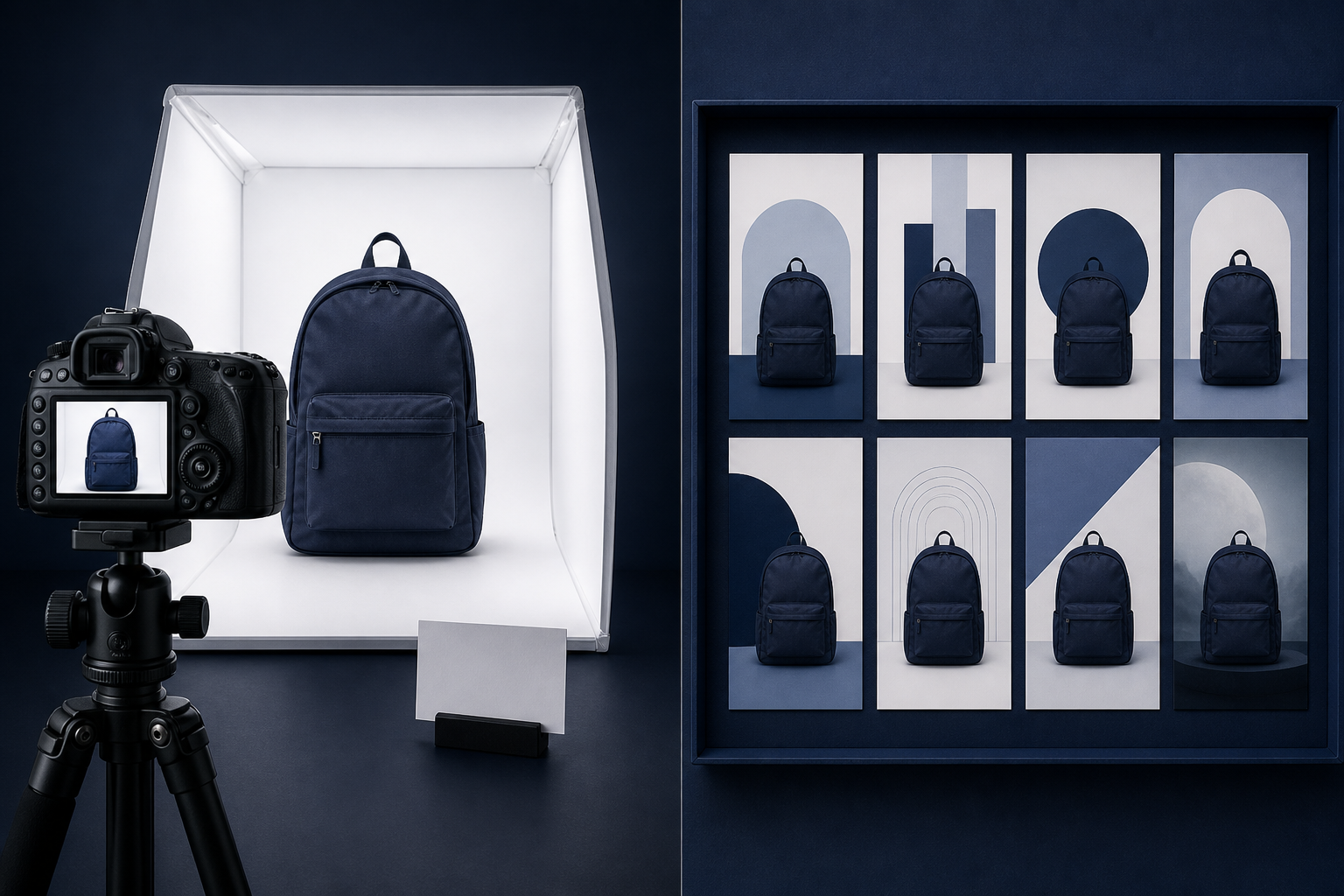
Here is the answer-ready line: Lock photo rules first, then use AI only inside those rules for variants and channel crops. Studio access helps. Standards help more. Consistency across the grid beats one expensive perfect frame that nothing else can match.
Why studio cost is the wrong first problem
Studio days are expensive. That fact drives bad decisions when it becomes the only frame.
Teams delay launches waiting for a full shoot. Or they shoot one hero collection, then fill gaps with random phone photos, stock, and ungoverned AI. The catalog becomes a museum of different lighting eras. Paid ads amplify the mess because each channel crop invents another dialect.
The real cost is not only the studio invoice. It is:
- Reshoot loops when new colors or bundles launch between bookings
- Marketplace rejection or poor conversion when thumbnails look uneven
- Creative fatigue when every campaign needs "the good photos" and the rest look orphaned
- Agency or freelancer time spent matching files that were never shot to a system
A studio is still valuable for hero truth, materials accuracy, and hard products (jewelry sparkle, fabric hand, food freshness). It is a poor weekly operating system for every crop, background, and channel variant. If your plan is "book studio, hope we captured everything," you will always be short.
Start with standards. Then decide which frames must be captured for real, and which variants can be produced inside those standards with AI.
Lock photo standards before you generate anything
Write rules a merchandiser can check on a thumbnail grid. Skip brand poetry.
Minimum viable product photo standard:
- Framing. Centered pack shot? Three-quarter? Always include label? Crop ratio for PDP vs marketplace thumbnail.
- Background. Pure white, soft gray, brand color field, or lifestyle set. Pick primary and secondary. Define when each is allowed.
- Light. Soft daylight, hard product light, or flat catalog light. Name the look. Ban the looks that already polluted the grid.
- Shadow and reflection. Soft contact shadow yes/no. Mirror reflections for cosmetics yes/no. Consistency matters more than drama.
- Scale and camera height. Products should feel comparable in size across a category row. Random zoom reads as different quality tiers.
- Props. Allowed props list and a hard reject list. Prop chaos is brand drift in costume.
- Hands and lifestyle. When humans appear, skin retouching limits, wardrobe neutrality, and whether faces are shown.
- File honesty. No invented materials, no fake certifications on pack, no "improved" label text that does not exist on the SKU.
Put three to five reference images next to the rules: "this is the dialect." Those references become the brand profile's visual memory for product work.
If you cannot pass a side-by-side test between last month's PDP and this week's draft, do not scale generation yet. You will only industrialize the mismatch.
Where AI helps: variants, backgrounds, and channel crops
Once standards exist, AI becomes a production multiplier instead of a style lottery.
Background swaps inside the rule. Keep the product truthful. Change only the field behind it when the standard allows white, gray, or brand color variants for different marketplaces.
Channel crops and safe zones. Generate or reframe sets for PDP gallery, Amazon main image constraints, Meta placements, email modules, and retail one-pagers without rebooking a studio for every ratio.
Colorway and bundle layouts. When the physical product is shot once per form factor, AI can help assemble approved color rows or bundle cards if your process validates accuracy against real inventory. Accuracy review is mandatory.
Seasonal campaign skins. Same product hero, campaign-compatible scene treatments that still obey light and shadow rules. Campaign layer changes. Identity layer does not.
Fill-the-grid production. New SKUs often need a full set: hero, angle, detail, in-context. Shoot the non-negotiable truth frames. Use AI inside the standard for supporting frames that do not invent materials.
Operating loop:
- Confirm the photo standard and reference set in the brand profile.
- Ingest or shoot the source product frame that will remain sacred.
- Request variants with prompts about job and channel, not "make it prettier."
- Review on a category grid, not as single hero files.
- Reject anything that breaks light, crop, or material honesty even if it looks premium alone.
When real photos are still mandatory
AI does not replace truth requirements. Know the hard stops.
Regulated claims and pack accuracy. Labels, warnings, nutrition, and claims must match the physical pack. Do not generate "cleaner" label art for ads if it is not what ships.
Material-critical categories. Fine jewelry, fashion fabric hand, furniture finish, fresh food, and similar categories often need real capture for trust and returns reduction. Use AI for layout variants only after legal and merchandising sign-off.
New materials or finishes never photographed. If you have no truthful source, do not invent the surface. Shoot it.
Lifestyle claims that imply real usage context you cannot defend. Generated kitchens and bathrooms are common. Generated "customer homes" presented as documentary proof are not.
Returns-sensitive detail. Stitching, texture, accessories in box, true scale against a hand or known object: when these drive return rates, prefer real frames.
Marketplace policy and brand integrity reviews. Some channels punish misleading imagery. Your internal standard should be stricter than the minimum policy.
A clean split looks like this: studio or controlled capture owns truth frames; AI owns volume inside those frames' rules. Confusing the two is how catalogs get pretty and untrustworthy.
Build the catalog system in Brandiseer
E-commerce teams do not need a poetic brand film for every SKU. They need a living photo profile that production tools obey.
Brandiseer fits as the memory layer for that profile: product references, background rules, light dialect, and do-nots live once. Merchandisers and marketers request channel sets without re-explaining "our white isn't that white." You still keep a studio relationship for truth. You stop paying studio economics for every crop and seasonal background.
Practical setup for a category:
- Pick one category that already looks inconsistent.
- Write the eight-point standard above on one page.
- Choose five reference SKUs that define the look.
- Upload those into a brand profile and generate a replacement set for ten neighboring SKUs.
- Put old vs new on one grid. Keep only what survives recognition and honesty checks.
- Roll the standard to the next category only after the first grid passes.
Founders without an in-house studio lead can run this with a freelancer for the truth shoot and Brandiseer for the variant factory. The freelancer should update the profile when standards change on purpose. They should not invent a new light dialect per invoice.
Marketplace and paid crop checklist
Before you scale AI variants, run this checklist on one SKU family:
- Main image background matches the marketplace rule without changing product color.
- Secondary gallery angles keep the same light family as the hero.
- Paid social crops keep the pack label readable at phone size.
- Bundle cards do not invent accessories that are not in the box.
- Old lifestyle frames that break the new standard are archived, not mixed into the live grid.
If any item fails, fix the standard or the source frame before you generate twenty more cousins. Volume without this checklist just accelerates returns and brand complaints.
FAQ
Can we go fully AI and skip product shoots?
For most physical goods, no. You need truthful source frames. AI is for governed variants, not for inventing the product.
What about lifestyle campaigns?
Run lifestyle as a campaign layer with its own brief, still bound by product honesty and brand light rules. Do not let campaign mood override catalog standards on PDP.
How do we handle marketplace-specific backgrounds?
Encode them as allowed variants in the standard (example: pure white for Marketplace A, soft gray for PDP). Generate from one product source so the item still matches.
Who approves exceptions?
Name one merchandising owner. Exceptions that repeat should update the standard. Silent one-offs become permanent drift.
Consistency is the catalog's product
Studio access is optional for many weekly needs. Photo standards are not. Lock rules first, use AI only inside those rules for variants and crops, and keep real capture for truth that shoppers and platforms must trust. Catalog consistency beats one perfect shoot that nothing else can follow.