You are shipping alone. There is no designer on payroll, no brand agency on retainer, and still a feed that needs posts, a deck that needs a cover, and an ad that needs to look like the same company. Most founders solve that with a scramble: Canva templates one week, Midjourney moodboards the next, a freelancer screenshot when money allows. Each file looks fine in isolation. Side by side, they look like three different startups sharing a domain.
The answer is not "hire a designer for every asset." The answer is one brand upload that becomes the source for generation. Founders keep consistency by storing brand once and generating from that profile, not re-prompting style each asset.
The real cost of inconsistency
Inconsistency is not a vibes problem. It is a trust and time problem.
When colors drift, logo placement wanders, and type mood flips from post to post, your audience learns the wrong lesson: this brand is hard to recognize. Recognition is how people know the next piece belongs to you before they read a caption. Without it, every post pays a fresh introduction tax.
There is also an operational tax. You reopen old files to "match this one." You rewrite prompts with the same hex codes and adjectives. You reject three almost-good generations because the fourth finally looks closer. Solo founders feel that tax as evenings lost to visual cleanup instead of product or sales.
Then there is the hiring tax. Spot freelancers help, but every handoff restarts the brand explanation. A PDF brand guide arrives in email. Assets still come back slightly off. You spend review cycles teaching taste instead of shipping. That pattern scales poorly when you need ten assets before a launch and your budget is credits, not a full design seat.
Cumulative drift is the name for the pile. One off-brand file is noise. A month of them trains the market to stop seeing you as a single system. The fix starts before the next prompt: lock identity once.
Build the brand kit once
Treat the brand kit as infrastructure, not as a pretty PDF you forget.
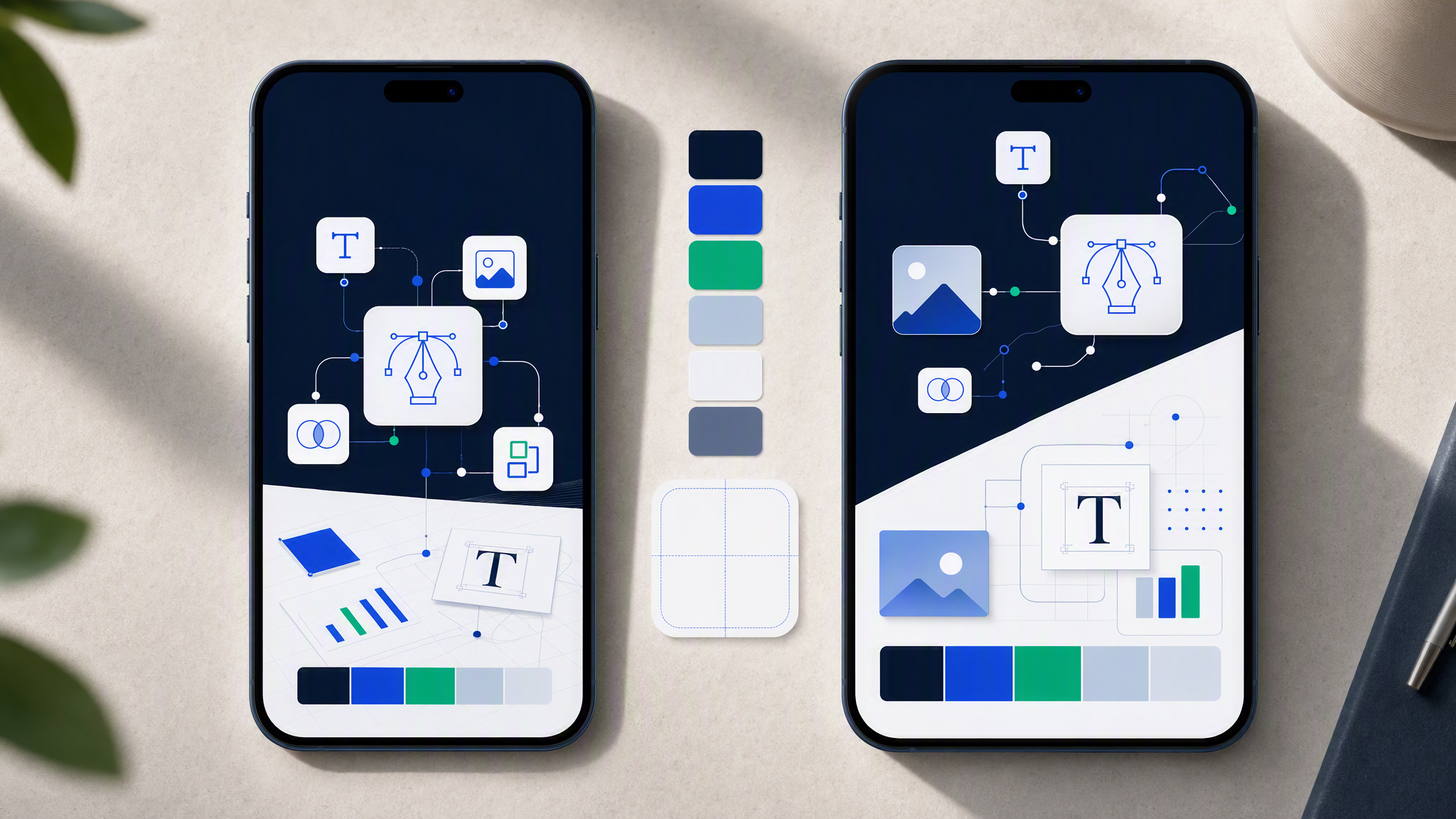
Upload what you already have: logo (primary and simple variants if they exist), core colors with hex values, fonts or clear type direction, and a short set of existing assets that already look like you. The goal is a durable profile the tool can apply, not a novel about brand personality.
Keep the kit small and concrete:
- Logo files that stay sharp on light and dark backgrounds
- Two to five brand colors, not a rainbow of "approved" options nobody uses
- Type choices you can actually ship with (or a clear substitute rule)
- Three to five reference assets that define layout habits: how much white space, how bold headlines feel, how product sits in frame
Skip abstract poetry. "We are bold yet approachable" does not keep a carousel on-brand. Hex codes, logo rules, and reference files do.
If you have nothing polished yet, start with what ships today: the logo on your site, the colors in your product UI, the fonts in your landing page. Consistency beats perfection. You can refine the kit later. You cannot refine a month of unrelated generations without rewriting the whole feed.
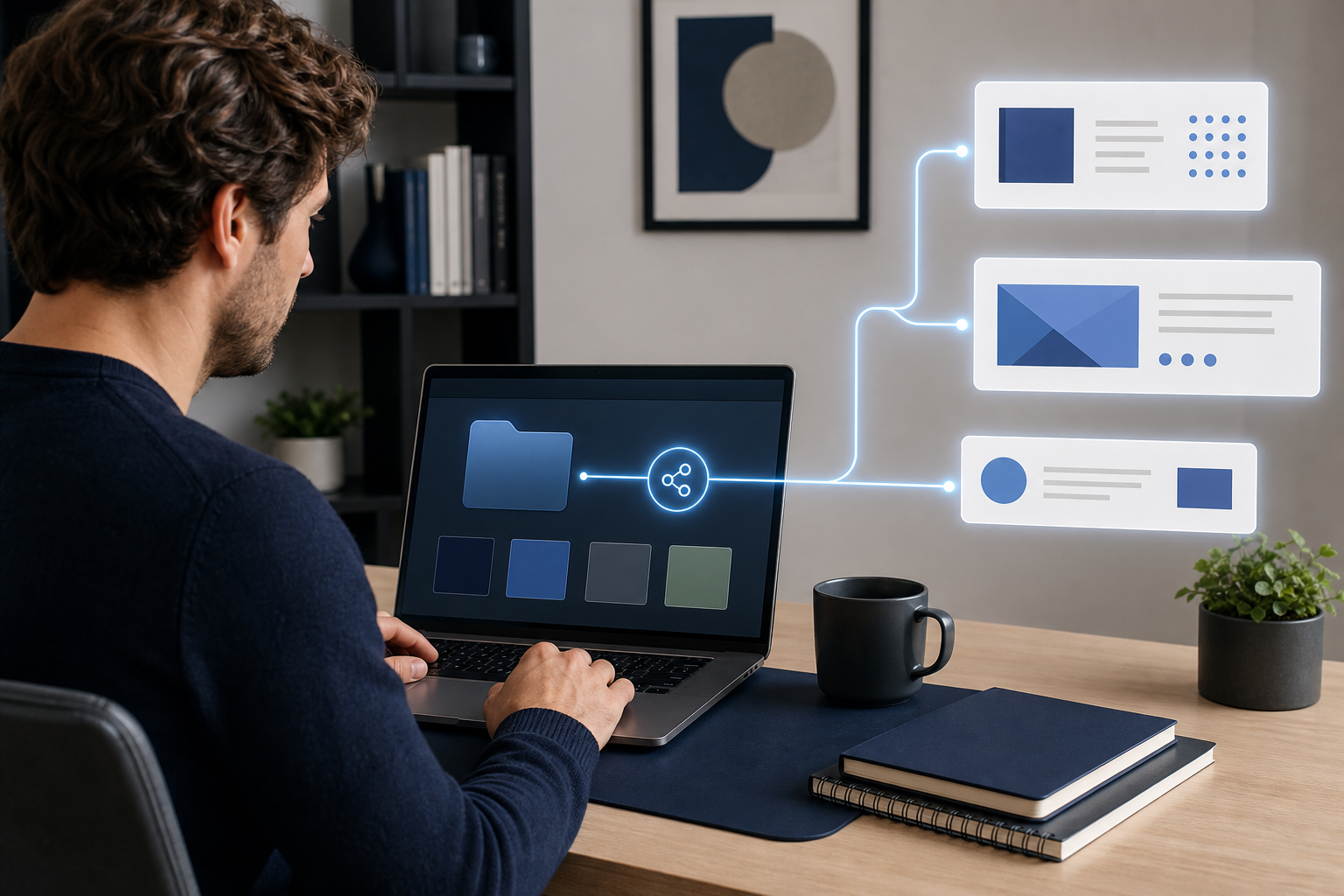
Store that kit in one place your generation workflow can read. Email attachments and desktop folders do not apply themselves. A brand profile inside the tool does.
What to generate first
Do not boil the ocean. Generate the assets that appear most often and train recognition fastest.
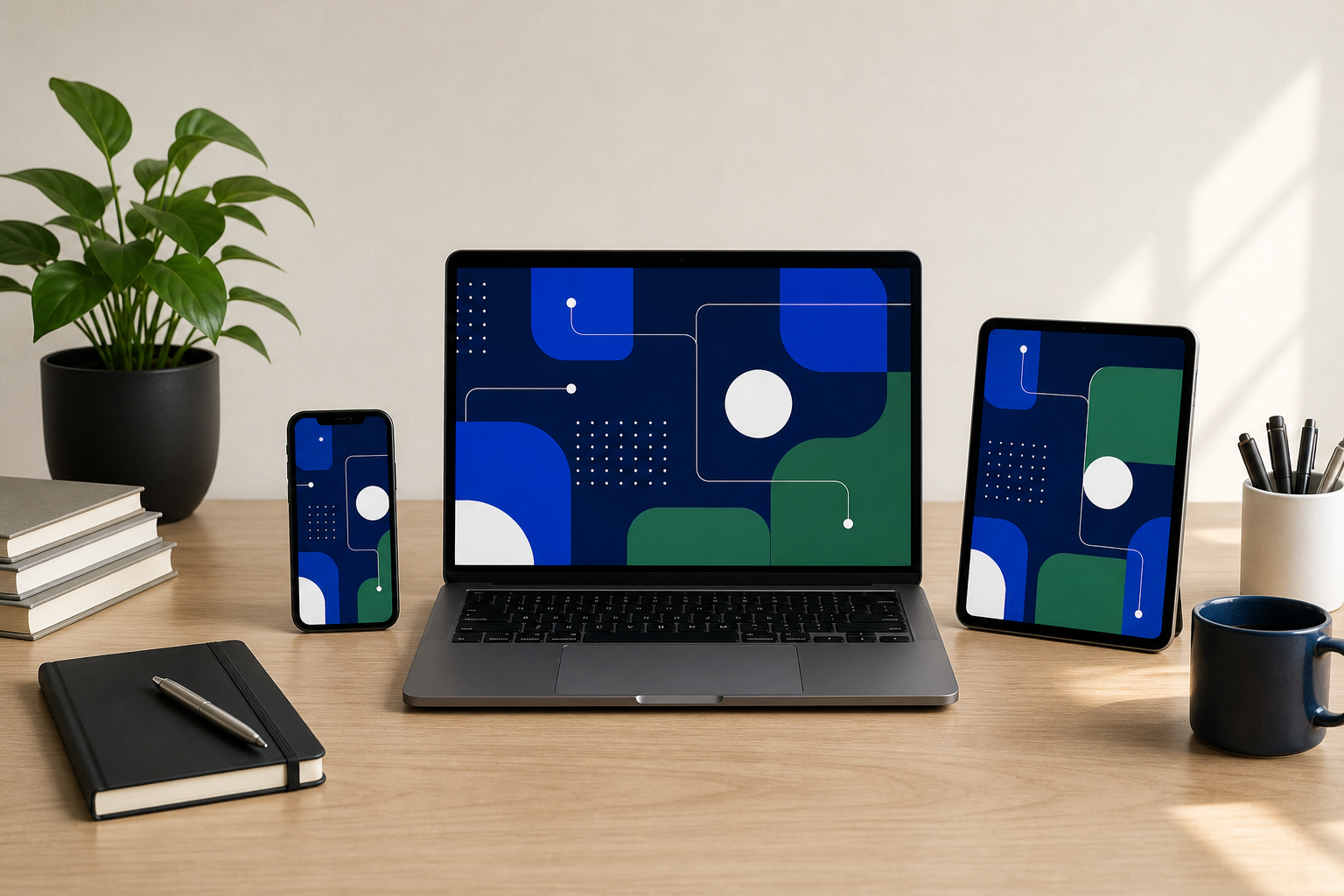
Start with social. Squares and carousels show up weekly. If those stay consistent, the public face of the company stabilizes even before decks and ads catch up. Request plain jobs: launch announcement, feature highlight, hiring post. Judge the set together, not one hero shot.
Add one deck cover and one recurring slide style. Investor updates and sales decks leak brand as much as Instagram. A matching cover and a repeatable interior pattern stop the "new slide theme every month" look.
Then ship one ad unit size you actually buy. Paid social rewards recognition across impressions. Generate a few variants from the same profile so testing creative does not mean inventing a new brand each A/B run.
A practical first week for a solo founder:
- Upload the brand kit and generate five social assets for the next calendar.
- Place them in a draft grid and check color, logo, and type together.
- Generate a deck cover that matches that grid.
- Generate two ad variants for one offer.
- Only then expand into banners, email headers, or one-off event graphics.
Volume without a profile multiplies drift. Volume with a profile multiplies recognition. Sequence matters.
When you still need a human
Brand memory does not replace judgment. It replaces re-teaching the look every time.
Bring a human designer when the work is truly new: a rebrand, a packaging system, a flagship campaign with novel art direction, or a dense layout that needs pixel-level craft. Those jobs need taste and exploration. Generative brand memory is the wrong tool for "surprise me."
Keep a human in the loop for high-stakes reviews too: legal claims on ads, accessibility checks, and anything customer-facing where a wrong crop or wrong claim costs more than a revision. Review is not the same as rebuilding identity from scratch.
Also hire for strategy and hierarchy when you are stuck on message, not on visual lock. A clear offer and a clear audience beat a prettier off-brand image. Brand memory assumes you know what you are saying. It helps you say it in one visual dialect.
The decision rule is simple. If the next asset must match the last five, generate from the stored profile. If the next asset is meant to redefine how you look, involve a designer and update the kit when the new look is chosen.
The Brandiseer path for solo founders
Brandiseer is built for the upload-once workflow. You put logo, colors, fonts, and references into a brand profile. Every generation inherits that identity. You describe the job in plain language instead of reconstructing style guidelines in the prompt.
That is the operational difference from "just use Midjourney carefully" or "just be disciplined in Canva." Care and discipline depend on the person in the chair. A stored profile depends on the system. When you are the only person in the chair, and you are also closing deals and shipping product, the system wins.
A realistic path looks like this:
- Collect logo, colors, fonts, and three good existing assets.
- Create the brand profile in Brandiseer.
- Generate the first social set and reject anything that breaks the kit.
- Lock a weekly rhythm: request, review, ship, keep the profile updated when the brand truly changes.
- Bring freelancers or a designer in for rebrands and special projects, then feed approved work back into the kit.
Commercial rights on generated visuals and a free tier with credits make the evaluation cheap. You do not need a design hire to prove the workflow. You need your real brand and a weekend of production pressure.
FAQ
Can I stay consistent without any designer ever?
Yes for recurring marketing formats, if the brand kit is real and the tool applies it automatically. You still want human help for rebrands, packaging, and unusual flagship work.
What if my brand is incomplete?
Start with logo, colors, and fonts from the site or product. Consistency from a thin kit beats chaos from a perfect PDF you never open.
Is a Canva Brand Kit enough?
It helps humans remember colors and fonts inside templates. It does not generate original assets from a living brand profile the same way. Many founders use templates for one-offs and brand memory for weekly volume.
Ship the next set from one brand profile
If you are a founder without a designer, stop paying the inconsistency tax with evenings and rejected exports. Store the brand once. Generate from that profile. Review the set, not the isolated hero.