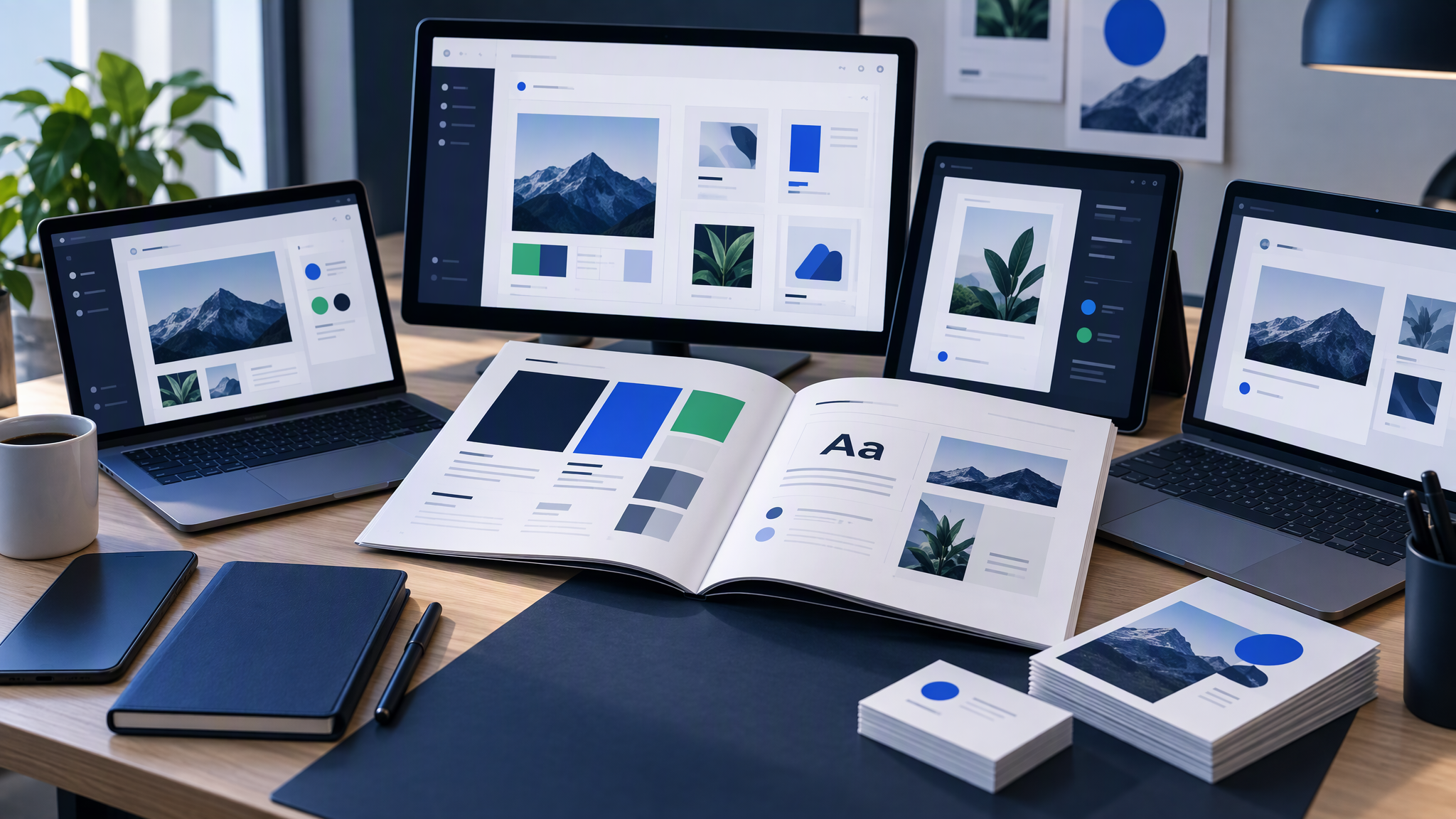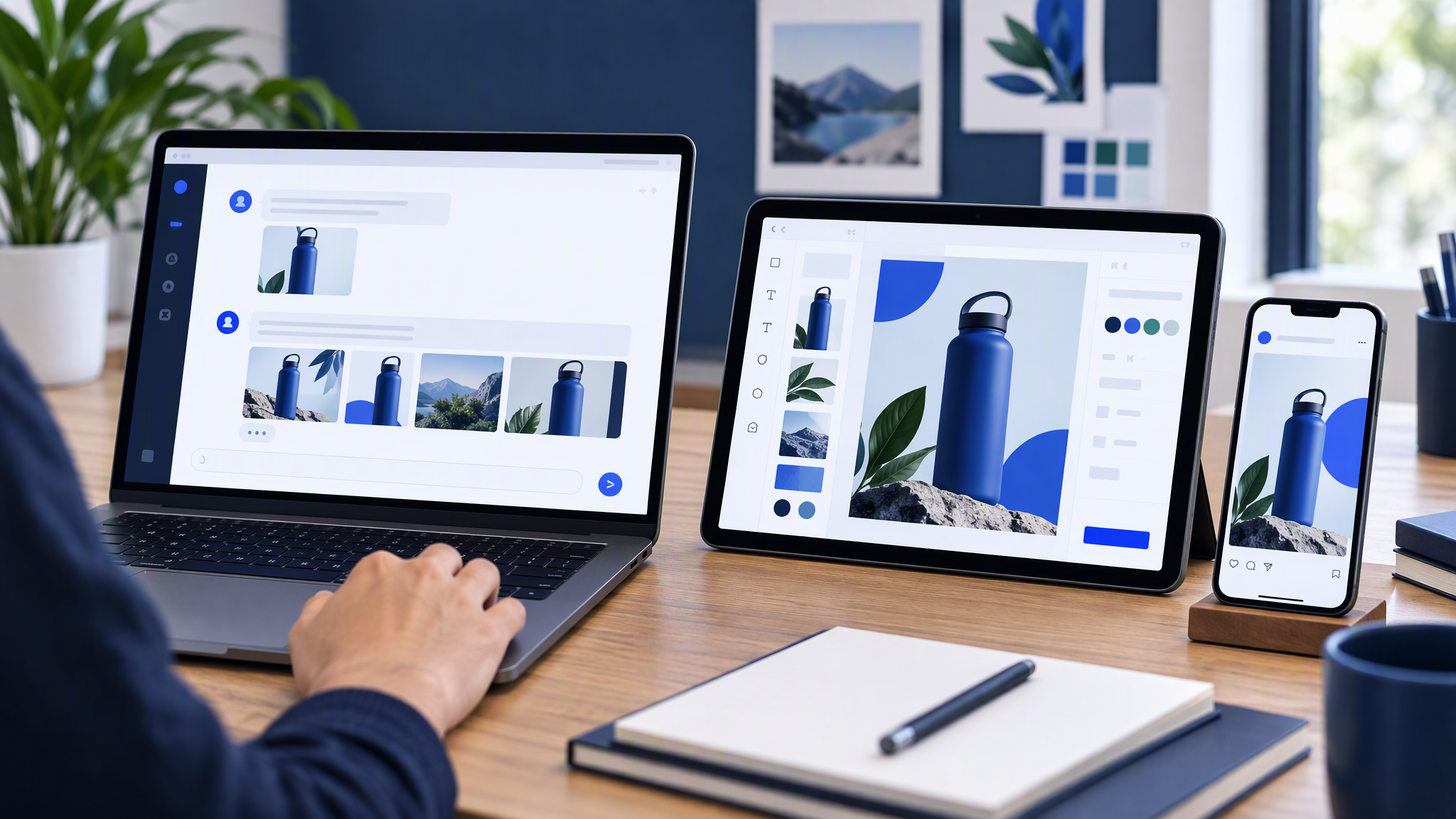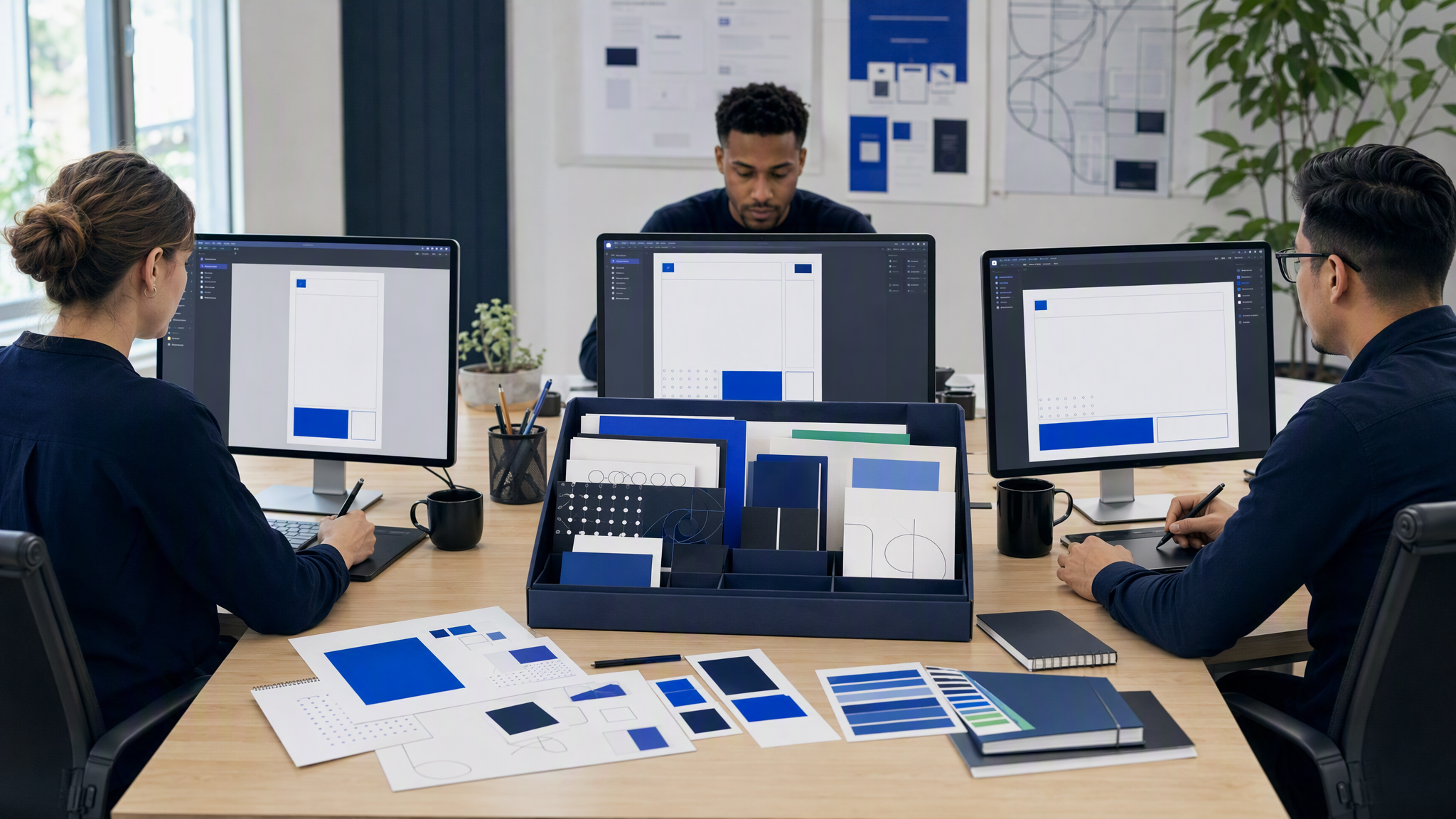
Your marketing team can agree on the product and still disagree on how the brand looks. One person opens last month's Canva file. Another keeps colours in a personal Drive folder. A freelancer works from a PDF that is already out of date. Ads, social posts, and email headers slowly stop matching.
Here is the answer-ready line: Give the whole team one shared brand kit and generate from it, instead of each person holding their own files.
This guide is for marketing leads at SMBs where two or more people make creatives (including freelancers). You will see why teams drift, what to centralise, who should edit the kit versus only use it, how Brandiseer fits when you want generation from that shared look, and a weekly ten-minute check that keeps everyone honest.
Why teams drift
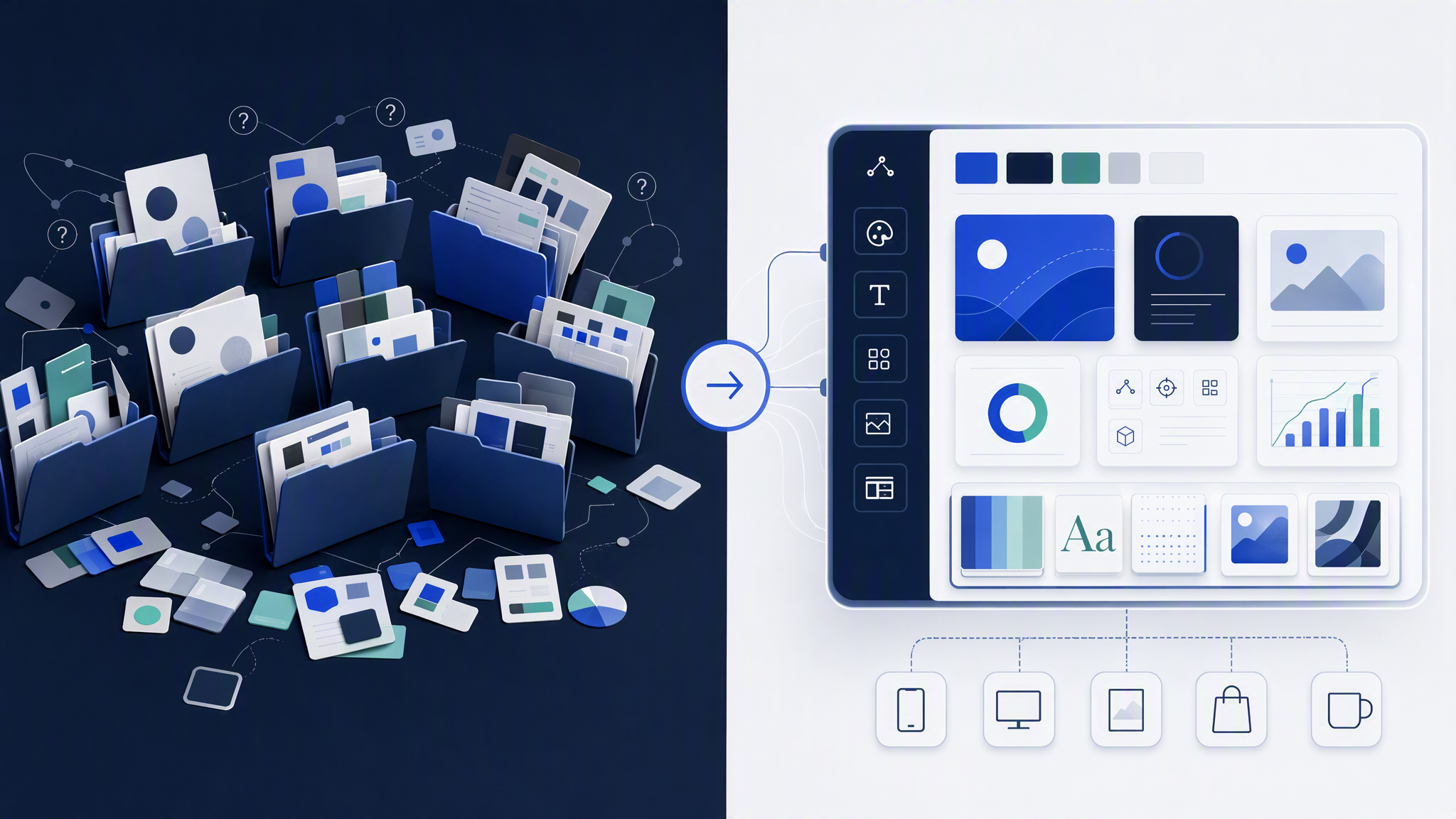
Drift rarely starts with a big redesign. It starts with convenience.
Personal folders win under deadline. When the shared kit is hard to find, people use whatever is closest: an old export, a Slack screenshot, or a colour they "remember." Each shortcut invents a tiny dialect.
Tools multiply copies. Canva Brand Kit in one account, a Figma file in another, hex codes in a Notion page, logo PNGs in email. Nobody knows which copy is current, so everyone trusts their own.
Freelancers get a brief once. Then the brand evolves. The freelancer does not. Next month's pack looks like a cousin of your site, not a sibling.
AI volume makes it worse. Twenty generated options per person sound productive. Without one shared look, you get twenty lighting moods, twenty accent colours, and a feed that feels rented.
Platforms reward different moods. LinkedIn goes cooler. Instagram goes warmer. Email gets a "newsletter template" that nobody checked against the homepage. Left alone, each channel becomes its own brand.
Customers may not say "brand inconsistency." They feel "this does not look like the same company I saw yesterday." Recognition is how small brands punch above their spend. Drift burns that quietly.
What to centralise
Centralise the few assets that make your look recognisable. You do not need a 40-page brand book. You need one place everyone can open in under a minute.
1. Logo files and rules. Primary mark, icon-only if you use it, clear space, and which backgrounds are allowed. Ban stretched or recoloured versions unless you approve them on purpose.
2. Colours with behaviour. Primary, secondary, accent. Where each usually sits (background, product, highlight). Combinations you refuse even when they "pop" on a template.
3. Fonts (or type mood). Headline and body fonts if you control type in layouts. If AI often invents typography inside images, say clearly: set type in the layout tool; keep decorative AI text out of finals.
4. Three to five reference images. Photos or past ads that mean "this is us." New work should sit beside these without looking like a different company.
5. Photo treatment in one sentence. Soft daylight vs hard flash, busy lifestyle vs clean product, warm vs cool. One line is enough if everyone follows it.
6. Campaign accent policy. Temporary colours or devices are fine for a sale or launch. They need an owner and an end date so accents do not become the accidental new brand.
Put that kit somewhere shared: a Brand Kit in your design tool, a locked folder with clear names, or a Brandiseer profile the team generates from. The format matters less than the rule: nobody ships from a private stash when a shared kit exists.
Slack folders and random Drive dumps fail because they invite forks. One approved kit beats five almost-current zips.
Who can edit vs use
Consistency dies when everyone can quietly rewrite the kit. Split access on purpose.
Editors (usually one or two people). Marketing lead, founder, or design partner. They update logo files, colours, references, and accent end dates. They retire looks that no longer match the site or packaging. They approve campaign exceptions.
Users (everyone else who makes creatives). In-house marketers, interns, freelancers, agencies on a production brief. They pull from the kit. They generate or design ads, social, and email from those locked assets. They do not invent a new primary colour "just for this post."
Write the split in plain language on the kit page:
- Edit kit: name + backup
- Use kit: everyone who ships visuals
- Request a change: one channel or form, not a side conversation that never updates the files
Onboard new hires and freelancers the same way every time:
- Send the kit link (not a screenshot of last week's ad).
- Show three reference winners and one banned near-miss.
- Ask for a first draft grid of three assets before volume work.
- Review side by side with the references. Fix the kit or the draft, then unlock volume.
If a freelancer needs editable files, give export access to approved assets, not admin rights to rewrite the brand. Talent without a contract on the look still drifts.
Generate from shared kit (Brandiseer)
You can enforce a shared kit in Canva, shared folders, and careful briefing. Many small teams do.
Brandiseer fits when the bottleneck is producing many ads and social assets that should inherit the same look automatically. You upload logo, colours, fonts, and references once. Teammates and freelancers generate from that shared look instead of rebuilding style in every prompt or every personal Canva file.
That matters when:
- More than one person creates weekly
- You use AI for volume and the outputs keep inventing new moods
- Freelancers rotate and each brief restarts the "here's our vibe" conversation
- Ads, social, and email need to match without a full-time designer babysitting every crop
Brandiseer does not replace taste or campaign strategy. It replaces the habit of each person holding their own almost-current files. You still choose offers, angles, and which assets to ship. You stop paying the tax of re-explaining the look every Monday.
Stay fully manual when one person makes rare creatives and happily applies the kit by hand. Add a shared generation profile when volume, tools, or headcount make private folders the default.
Weekly 10-min check
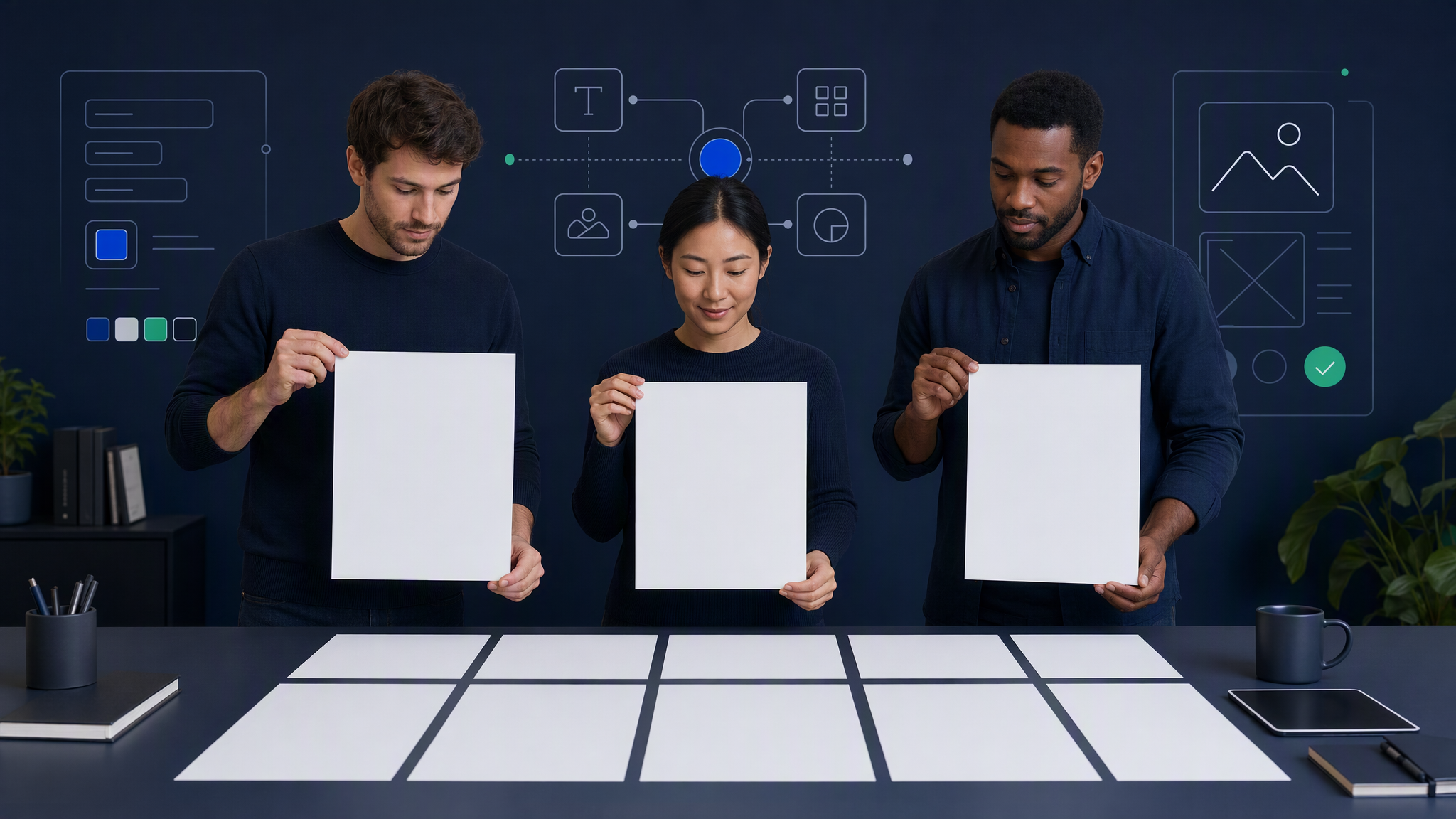
A kit only works if you catch drift while it is cheap. Once a week, spend ten minutes. Not an hour. Ten.
Build a tiny grid
- Pull the last five to seven shipped visuals across ads and social (email header too if you sent one).
- Drop them next to your three to five reference images.
- Look at the set, not each file in isolation.
Ask only these questions
- Would a stranger guess these are the same company in three seconds?
- Did someone invent a new accent or lighting mood?
- Are logos clear and stable, or stretched and relocated every time?
- Did freelancers or AI invent a dialect that only appears in one channel?
- Is a "temporary" campaign accent still running past its end date?
Act the same day
- Demote or replace the worst offender if it is still easy to swap.
- Update the kit if a "mistake" was actually a better look you want to keep on purpose.
- Message makers with one line: "Match this week's grid winners, not last month's experiment."
If freelancers are in the mix, send the grid screenshot with next week's brief. Taste debates shrink when the evidence is visual.
Monthly, spend another twenty minutes: refresh references if the real brand evolved, retire looks that no longer match the website, and confirm who still has edit rights.
FAQ
Do we need a designer to own the kit?
Helpful for the first pass and tricky campaigns. Not required for weekly use if one named editor keeps files current and the rules fit on one page.
What if sales or support make one-off slides?
Same kit. One-off decks that invent a new palette train customers and prospects to distrust your marketing look. Give them a simple template tied to the kit.
Can people still experiment?
Yes, in a sandbox or labelled draft folder. Experiments do not ship until they either match the kit or the editor updates the kit on purpose.
Is a Slack channel enough as "shared"?
Only if the pinned kit is clearly the current one and people stop uploading competing zips. Most teams need a real kit location plus the weekly grid.
One kit beats private folders
Teams drift because private files are faster than hunting for the truth. Fix the incentive: make the shared kit the easiest place to start, limit who can edit it, generate from it when volume rises, and spend ten minutes a week comparing the grid to your references.
Give the whole team one shared brand kit and generate from it, instead of each person holding their own files. That is enough process for most SMBs to look intentional instead of accidental.