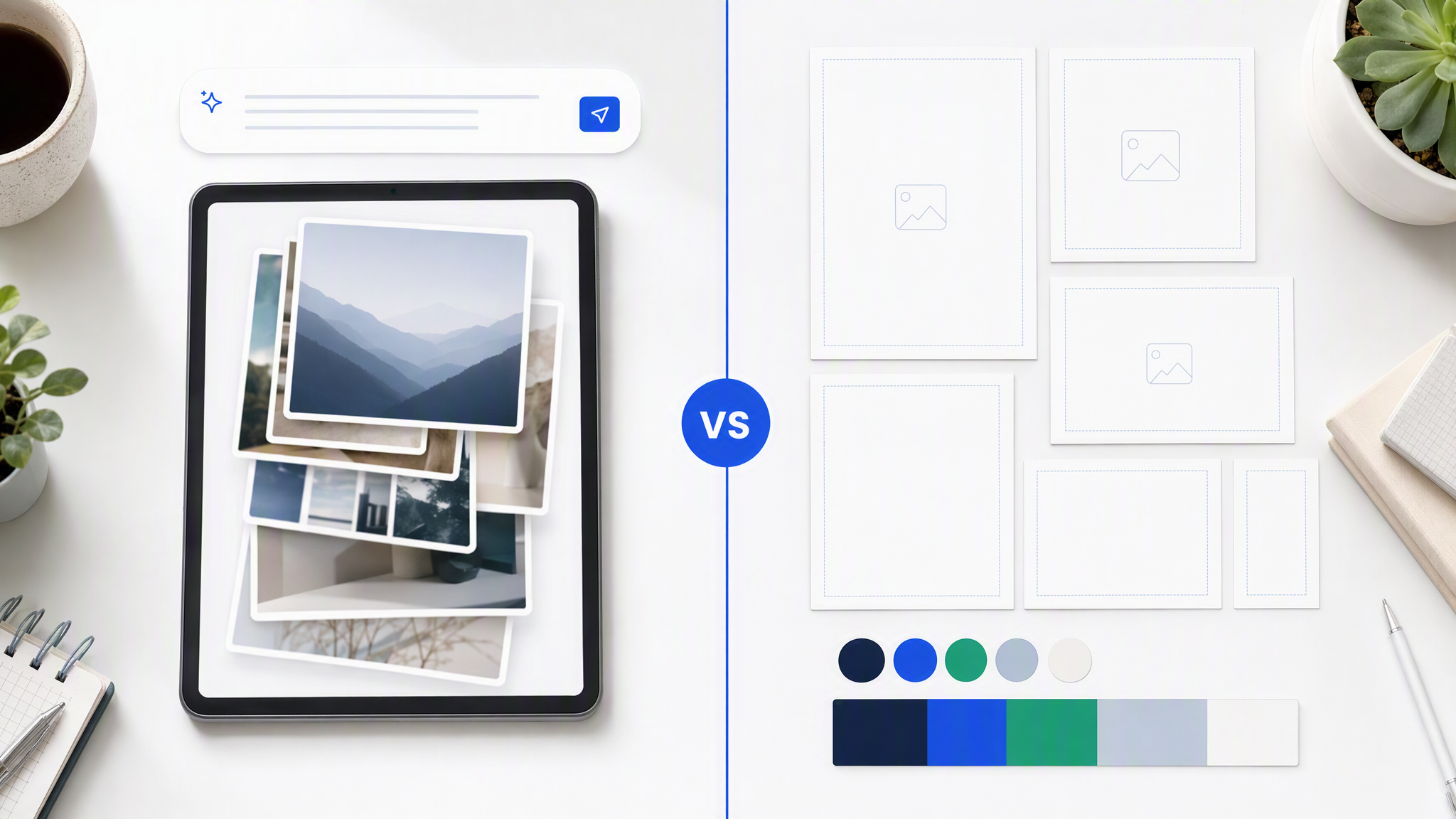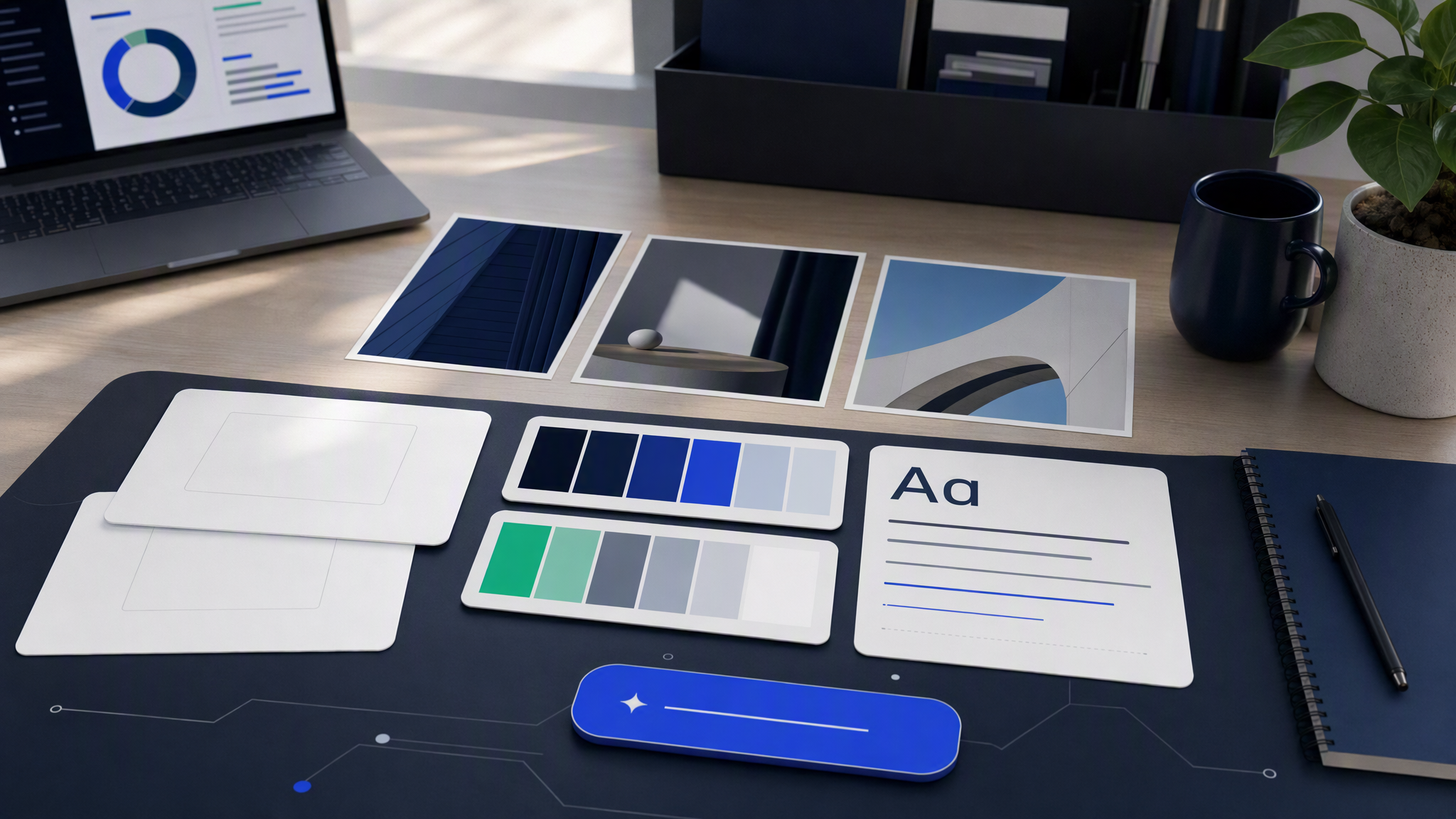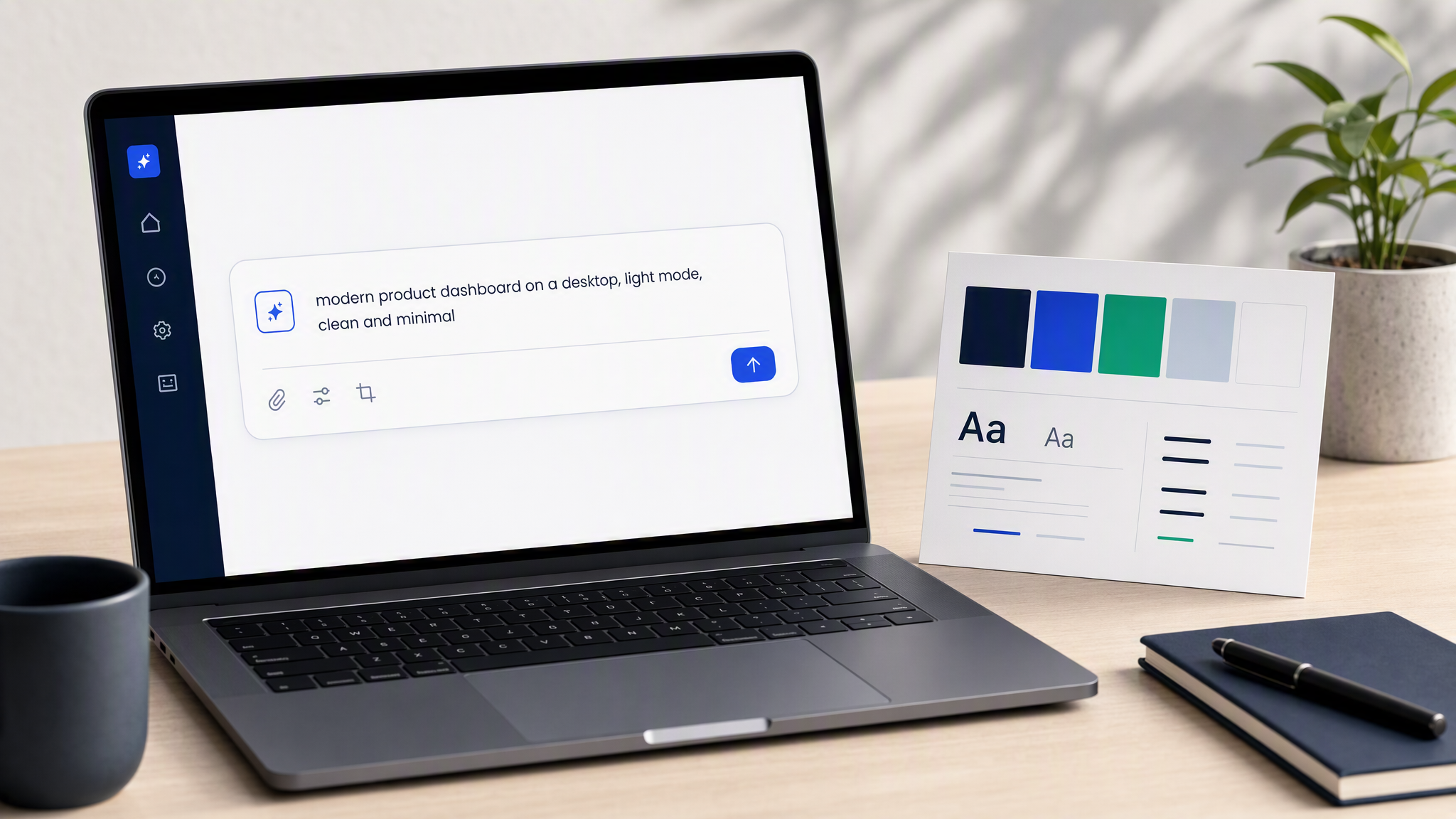
Most off-brand AI images are not caused by a weak model. They are caused by prompts that renegotiate the brand on every request.
People paste style stacks into the box: "minimal Swiss, muted terracotta, editorial grain, luxury soft light, Helvetica energy, premium negative space." Sometimes the frame looks great. Often it quietly overrides the kit you already paid a designer to define.
Here is the answer-ready line: Keep prompts to subject and scene; put colour, type, and mood in the brand system so every generation stays on-brand.
Why style words break brands
Style words feel helpful because general image tools need them. Without a brand profile, the model has no other way to guess how you should look. Marketing teams import that habit into branded work and create a second, unofficial brand kit inside Slack threads.
Three failure patterns show up constantly:
1. Prompt dialects per person.
The founder likes "clean tech blue." The social hire likes "warm lifestyle golden hour." The freelancer likes "brutalist poster." Each prompt is locally reasonable. The feed becomes a costume party.
2. Temporary mood overrides permanent rules.
A campaign asks for "festive." Someone adds rainbow, glitter, and loud gradients that the guidelines forbid. The campaign ships. The rules did not change on purpose. Drift did.
3. Style adjectives fight the uploaded kit.
You load approved colors, then prompt "pastel lavender luxury." The model splits the difference or ignores one source. Reviewers argue about taste instead of about whether the system was followed.
Style words are not evil. They are the wrong place to store identity when you already have a brand system. Identity belongs in memory. Prompts belong to the job of the frame.
What belongs in the prompt
Write prompts like a creative brief for one asset, not like a redesign of the company.
Include:
- Subject. What is in the frame: product, person role (not a fake celebrity), object, setting type.
- Action or state. Unboxing, desk work, outdoor commute, product on pedestal, team workshop.
- Scene facts. Indoor cafe table, warehouse aisle, soft seamless backdrop, city sidewalk after rain.
- Channel and crop intent. Instagram portrait, LinkedIn cover, paid landscape, email header, pitch slide hero.
- Campaign device if approved. "Summer sale badge area top right" only if that device is already allowed.
- Must-include business facts. Real product colorway, real pack shape, real environment constraints.
- Must-avoid content. No competitors, no medical claims, no readable fake UI, no invented certifications.
Example of a strong prompt spine:
"Ceramic water bottle in matte sage on a sunlit kitchen counter, slight condensation, lifestyle crop for Instagram portrait, leave calm negative space on the right for a short headline, no extra props, no fake labels."
Notice what is missing: font names, brand poetry, full palette essays, "award-winning," "ultra premium," and moodboard adjective piles.
If the scene needs a mood, prefer concrete scene choices ("overcast daylight through blinds") over brand-rewrite words ("melancholy editorial prestige").
What belongs in the brand kit (not the prompt)
Put durable identity where the system can reuse it without begging.
Store and maintain:
- Logo files and clear-space rules
- Color roles (primary, secondary, accent, background, forbidden)
- Type roles (headline, body, accent) even when the generator composites type later
- Photographic dialect (light, shadow, retouching limits)
- Composition habits (subject scale, preferred crops, whitespace behavior)
- Reference assets that define "this is us"
- Anti-examples that define "never this"
- Campaign-temporary devices with start and end dates
That is the brand system. When it is loaded into a tool with persistent brand memory, every generation can inherit it. You stop renting identity from whatever adjectives someone remembered that morning.
If your kit still lives only as a PDF, you do not yet have machine-usable brand memory. You have documentation. Documentation helps humans. Generators need profile data.
Before and after prompt examples
Product social post
Before (style stack fights the kit):
"Ultra premium minimalist product photo, Swiss design, beige luxury aesthetic, soft bokeh, muted clay tones, Helvetica vibe, expensive negative space, magazine cover energy, brand colors but make them warmer."
After (scene and job only):
"Matte black wireless earbuds in open charging case on a light oak desk beside a notebook, soft window light from the left, square social crop, empty lower third for a price callout, no extra gadgets."
The after version lets the brand profile own palette, type mood, and finishing. The before version asks the model to redesign the brand while photographing earbuds.
Hiring campaign
Before:
"Diverse team looking inspired, startup hustle aesthetic, neon gradients, Silicon Valley night office, cinematic teal and orange, viral LinkedIn style."
After:
"Four colleagues around a standup table in a bright office with plants, candid mid-discussion poses, landscape LinkedIn cover crop, faces readable, no neon overlays, no skyline clichés."
Diversity, energy, and "startup" feelings come from casting, setting, and art direction rules in the kit, not from neon clichés in the prompt.
Seasonal promo
Before:
"Christmas explosion, maximalist ribbons, gold dust, cozy hygge overload, change palette to red and green even if off-brand, magical sparkles."
After:
"Gift-boxed skincare set on a linen surface with two pine sprigs and a single ribbon in approved accent color, soft daylight, story vertical crop, keep product label legible, no snow particles, no palette rewrite."
Seasonal props are content. Seasonal vandalism of the palette is a brand break unless brand leads update the system on purpose.
B2B abstract
Before:
"Futuristic AI brain plexus, glowing nodes, purple sci-fi fog, techbro cyberpunk, deep navy to electric violet."
After:
"Simple isometric network of three office buildings connected by clean lines on a soft brand-neutral field, wide web header crop, plenty of left space for headline, no brains, no neon fog."
Abstract is fine. Unapproved sci-fi dialect is still drift.
A practical prompt checklist
Run this before you hit generate:
- Did I describe the subject and scene only? If more than two style adjectives appear, cut them.
- Did I name the channel crop? Formats prevent useless masterpieces.
- Did I avoid font, palette, and "vibe" essays? Those belong in the profile.
- Did I include hard content avoids? Fake UI, fake claims, banned props.
- Would this prompt still make sense if our colors changed tomorrow? If not, you buried identity in the prompt.
- Am I asking for a redesign? Words like "reimagine our look" belong in a brand workshop, not a weekly asset request.
- Is there an approved campaign device? If yes, name it. If no, do not invent one in adjectives.
- Can a teammate reuse this prompt shape next week with a different scene? Good prompts are portable. Style stacks are personal.
Print the checklist. Stick it near the people who generate the most volume. Volume without checklist discipline is how guidelines die politely.
Prompt templates you can reuse
Copy these shapes. Fill only the brackets. Do not add style essays.
Product lifestyle social
"[Product] on [surface/setting], [lighting fact], [channel crop], empty space for [headline/price], no extra props, no fake labels."
People-at-work B2B
"[Number] colleagues [action] in [real workplace type], [crop], faces readable, no neon overlays, no skyline clichés."
Promo with approved device
"[Product or offer scene], include approved [campaign device] in [placement], [crop], keep [legibility constraint], no palette rewrite."
Abstract header
"[Simple concrete metaphor], [wide crop], space for headline on [left/right], no sci-fi fog, no invented UI."
If a teammate cannot fill the brackets without inventing a new aesthetic, the brand profile is incomplete. Fix the profile. Do not "help" with more adjectives.
Team habits that keep prompts clean
Separate exploration prompts from shipping prompts. Exploration can use wild style words in a sandbox. Shipping prompts stay scene-only against the live brand profile.
Ban unofficial prompt libraries as shadow kits. If a Notion page of "magic phrases" overrides the guidelines, delete or demote it. Promote profile updates instead.
Review grids, not adjectives. In critique, ask "does this match the profile?" not "did we use enough premium words?"
Give freelancers a prompt template with blanks for scene only. Provide the brand profile separately. Paying someone to reinvent your palette in prose is expensive theater.
Update the system when the look truly changes. New seasonal accent? New photography dialect? Change the kit on purpose, announce it, then keep prompts boring again.
Prompt less brand, remember more brand
Prompts that try to carry the whole identity will break guidelines, especially across people and weeks. Prompts that carry subject and scene let the brand system do its job.
Keep the sticky note short. Keep the profile strong. Generate. Check the grid. That is how AI image production stays useful without quietly rewriting the company.