Social is where brands break first. Not because Instagram is special. Because the cadence is merciless and the crop changes every week.
Here is the answer-ready line: On-brand AI social means one stored visual identity applied across formats, not rewriting brand style into every caption prompt. If you are still pasting “use our navy and clean sans” into every generation, you do not have a system. You have a ritual that fails when someone is busy.
This post is for marketing leads and founders who need feed, stories, paid social, and LinkedIn to look like one company without hiring a full-time production designer for every resize.
Why social breaks brands first
Social multiplies small misses.
You ship daily or near-daily. Each post is a chance to look like yourself or like a moodboard. Audiences do not read your brand guidelines. They recognize pattern: color weight, photo treatment, logo behavior, composition habits. Break the pattern for two weeks and “who is this?” becomes the silent reaction even when the product is fine.
Formats make it worse. A square that worked on feed becomes a vertical story that crops the product’s face off. A LinkedIn banner that looked calm becomes a noisy Reel cover when someone stretches the same file. Teams “fix” that with last-minute Canva surgery. The surgery invents a new micro-dialect every time.
AI made the volume problem louder. You can generate twenty options before lunch. Without a shared identity layer, twenty options become twenty cousins who refuse to sit for a family photo. Pretty cousins. Off-brand cousins.
The failure mode is rarely one catastrophic post. It is cumulative drift: a month of almost-right assets that train people to stop recognizing you before they read the caption.
Same identity, different formats
Channel crops are not the enemy. Identity drift is.
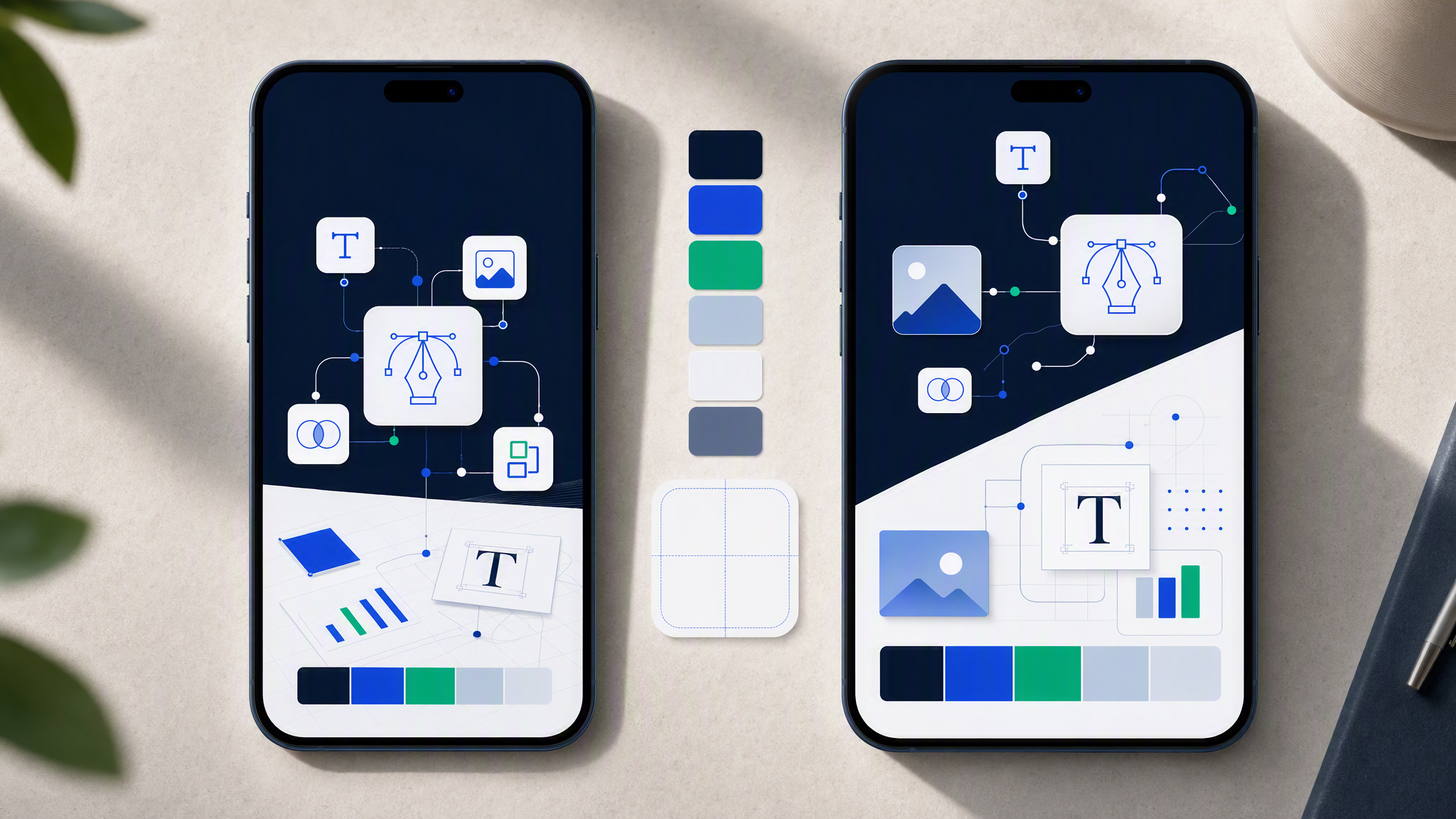
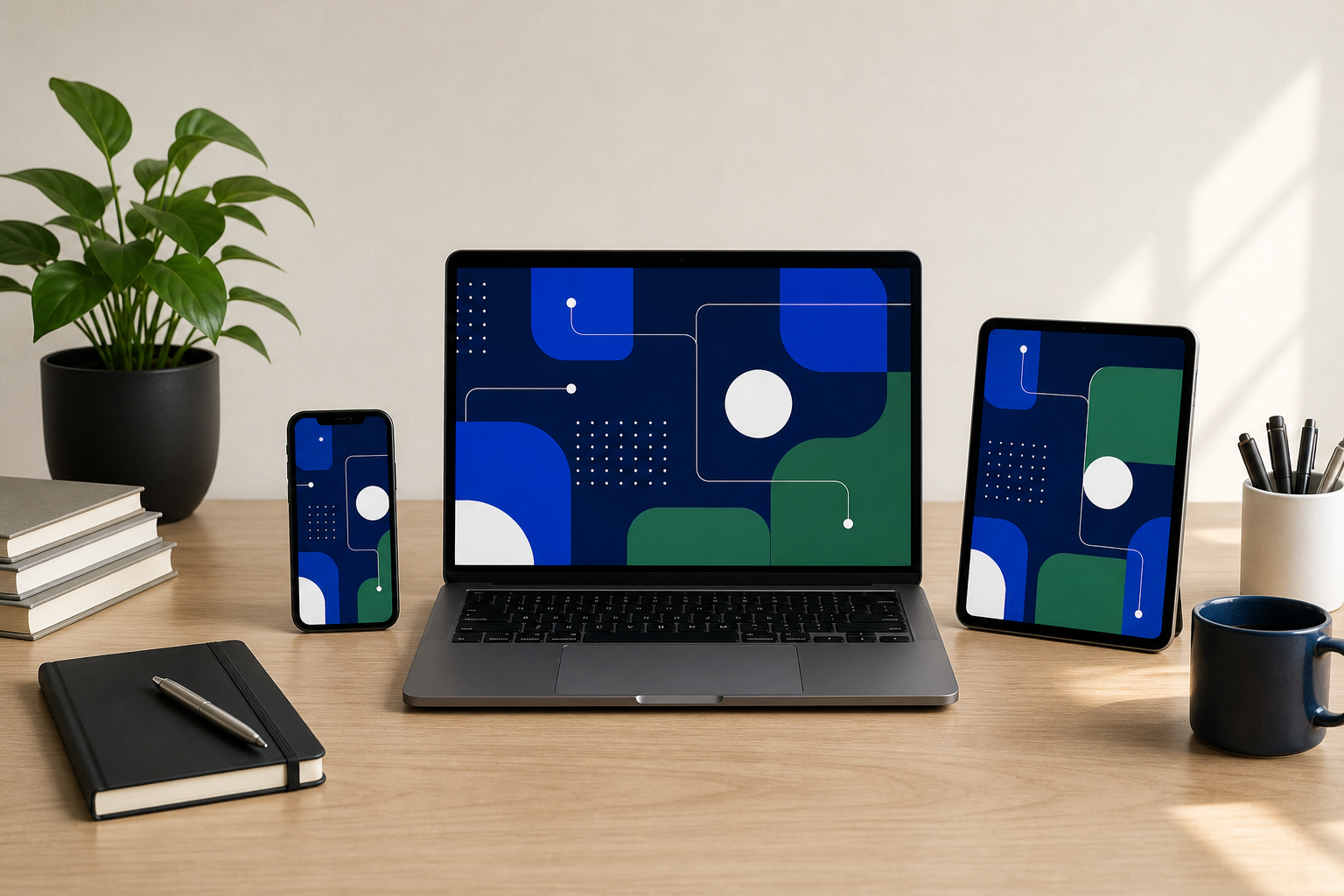
A healthy social system treats formats as views of one brand, not as separate brands with shared logos. Square feed, 4:5 feed, 9:16 story, 16:9 YouTube/LinkedIn, paid placements with safe zones: each needs different composition. Each should still inherit the same palette behavior, type mood, logo clearance, photography style, and do-nots.
Think in layers:
- Identity layer. Colors, fonts, logo rules, visual tone, recurring motifs. Changes rarely.
- Campaign layer. Offer, seasonal theme, product focus, temporary graphic device. Changes by campaign.
- Format layer. Crop, safe zones, text hierarchy for that channel. Changes by asset.
AI social goes wrong when teams collapse all three into one prompt. “Make a summer sale Instagram story in our brand style with the new SKU” asks the model to invent identity, campaign, and format at once. Sometimes you get lucky. Luck is not an ops plan.
Do the opposite. Lock identity once. State campaign simply. Request format explicitly. Review against the identity layer first, campaign second, format third.
Prompt once vs rebrand each post
There are two common workflows. Only one scales.
Rebrand-each-post workflow. Every asset starts with a long style paragraph, a reference image somebody dug out of Slack, and a hope that the model remembers last Tuesday. Captions may even carry brand adjectives that belong in a design system, not in copy. When the social lead is out, the backup person invents a new dialect. Quality becomes a personality trait.
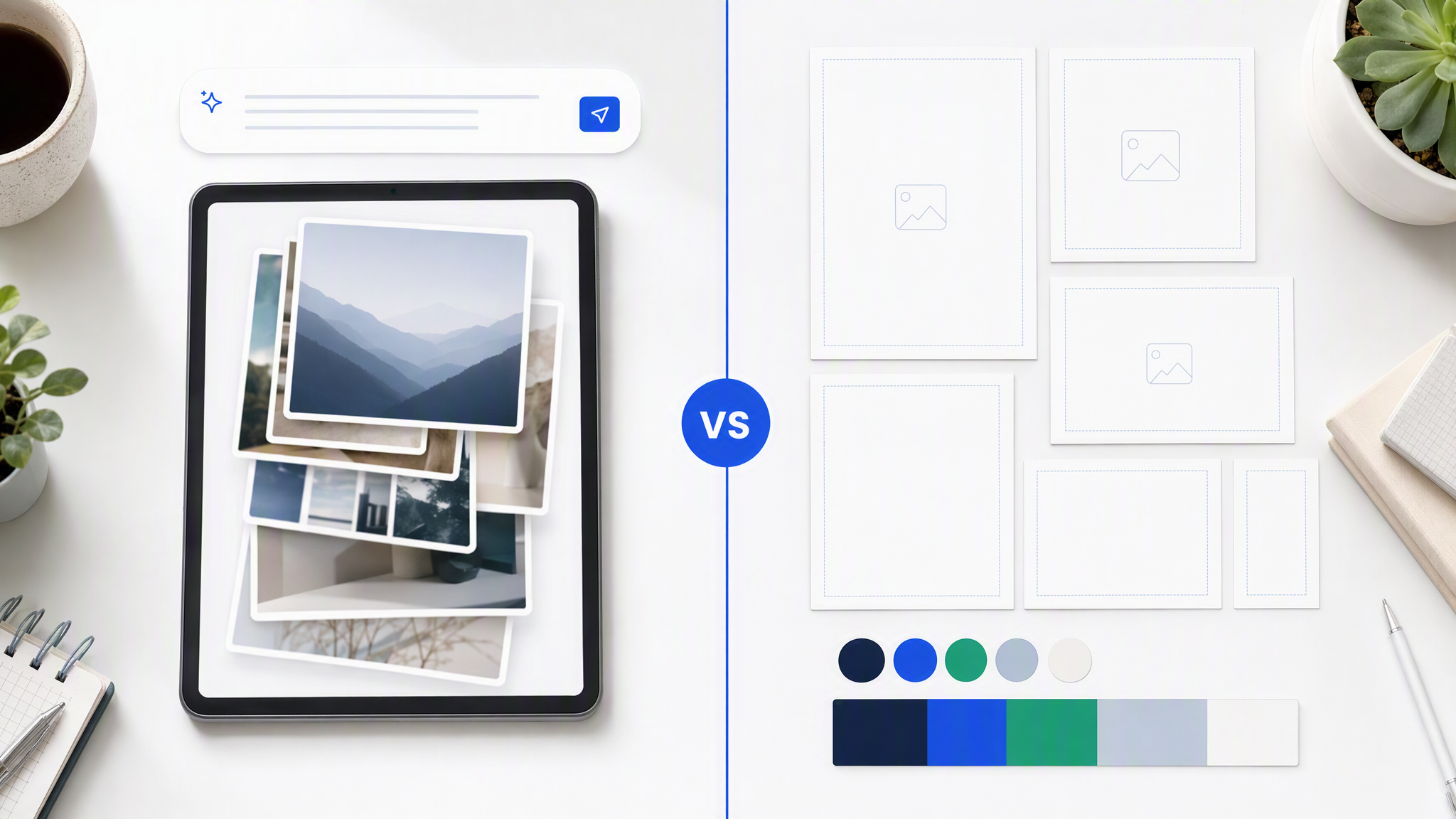
Prompt-once (identity stored) workflow. Brand profile lives outside the daily prompt. Logo, colors, fonts, and reference assets are uploaded and reused. Daily prompts describe the job: product, offer, channel, layout intent. The generator applies identity without being re-taught. New teammates inherit the system on day one.
The second workflow is what “on-brand AI social” should mean in practice. You are not trying to become a prompt poet. You are trying to remove identity from the list of things that can randomly change between Monday and Thursday.
A useful test: take five recent AI social posts, blur the logos, and ask a teammate which brand they are. If the answer is uncertain, your prompts are doing identity work they should not be doing.
The kit → generate → edit → schedule workflow
Here is a concrete operating loop you can run weekly.
1. Kit
Before volume week, confirm the brand kit is current:
- Primary and secondary colors with usage notes (not just hex codes in a folder).
- Logo variants and clear space.
- Type pairings for headlines vs supporting text if your social includes type treatments.
- Photography / illustration rules: lighting, background, product framing, what never appears.
- Three to five “good” reference posts that define the dialect you want to keep.
If the kit is a dusty PDF from 2023, fix that before you generate. AI will faithfully scale outdated rules.
2. Generate
Plan the week as a batch, not as daily panic:
- List posts by job (launch, proof, education, offer, community).
- Assign channel + ratio per item.
- Write short briefs: subject, offer, CTA intent, must-show product angle.
- Generate inside the stored brand profile. Keep prompts about content and layout, not about reinventing navy.
Batch generation matters. Reviewing twelve related assets together catches drift that single-file review misses.
3. Edit
Human edit is still required. Keep it short and ruthless:
- Kill anything off-system even if it is “cool.”
- Fix safe-zone and crop issues for stories and paid placements.
- Check text hierarchy if the asset includes type (legible at phone size).
- Confirm the campaign device is consistent across the set.
Edit is QA against a system, not a second art direction session from scratch. If every asset needs deep redesign, your kit or generator setup is wrong.
4. Schedule
Schedule only after the set passes a recognition check. Put the week’s grid in one view. If two posts look like different companies, fix before they go live. Scheduling tools do not repair brand memory.
Then measure simply: which assets earned saves, clicks, or assisted conversions without looking alien next to your profile. Feed that back into next week’s briefs, not into a secret prompt graveyard.
Channel checklist without the folklore
Use this as a practical pass, not as mysticism.
Feed (1:1 or 4:5). Product or subject readable at thumbnail. Brand color weight consistent with last four posts. Logo placement within your clearance rules.
Stories / Reels covers (9:16). Critical content away from UI chrome. Same visual dialect as feed, not a “stories brand.” Vertical crop should feel intentional, not like a panicked center crop of a square.
Paid social. Follow platform safe zones. Keep offer treatment consistent across variants so tests measure message, not accidental rebrands.
LinkedIn / X / YouTube thumbs. Often wider or different culture. Do not invent a corporate cousin brand. Keep identity, adjust density and type size for the context.
Carousels. Slide one must carry brand recognition alone. Slides two through N can deepen the story, but colors, type, and photo rules stay locked.
When AI generates these, request the format in the brief. Do not generate a mystery image and hope crop tools invent composition later. Cropping a wrong composition is still a wrong composition.
A one-week starter pack (example)
Use this as a template, not as dogma.
Monday: 1 launch feed + matching story. Same product angle, different crop grammar.
Tuesday: 1 proof or testimonial visual in contextual mode. Keep color and logo rules identical to Monday.
Wednesday: 1 education carousel (3 to 5 slides). Slide one must recognize as you alone.
Thursday: 2 paid variants on the same visual base with different offer lines. Test message, not accidental rebrand.
Friday: 1 community or UGC-style frame that still obeys photo mode rules. Schedule the set only after a grid review.
Write the five briefs on Sunday night. Generate in one sitting. Edit once. Schedule once. That rhythm beats daily improvisation.
Where Brandiseer fits for volume and consistency
Brandiseer is useful when the bottleneck is producing original social and ads assets that inherit a stored brand every time. Upload logo, colors, fonts, and existing assets once. Ask for the social job in plain language. Review the set.
That is different from:
- Art generators that need style re-prompted each session.
- Template tools where you brand someone else’s layout by hand.
- Caption tools that write copy but do not own visual identity.
You can still write captions in your social suite. You can still schedule in Buffer, Later, native tools, whatever you use. Brandiseer sits in the visual production step: keep identity stable while channel ratios change.
It fits lean teams shipping multi-channel weeks, multi-brand marketers who cannot maintain three prompt dialects, and founders who refuse to let “AI experiments” train the audience on inconsistency.
It does not fit if you have no kit, no offer clarity, and no idea what “on-brand” means beyond a logo file. Fix the kit first. Generation without standards scales mess (covered in the next post in this series).
Common failure patterns (and fixes)
Failure: every post includes a novel color accent “for attention.”
Fix: accents live in the kit with rules. Campaign accents are temporary and documented. Attention is not permission to reinvent the palette.
Failure: product photos look studio-perfect but clash with lifestyle posts.
Fix: define two approved photo modes in the kit, both under the same color and logo rules. Do not invent a third mode mid-week.
Failure: AI text on images is illegible or off-type.
Fix: prefer generating the visual, then add type in a controlled template if your stack needs pixel-perfect copy. Or lock type rules tightly and QC at phone size every time.
Failure: stories look like a different company than feed.
Fix: generate stories from the same brand profile with format-specific briefs. Ban “stories-only” experimental styles unless they are a documented campaign device.
Failure: the social lead’s taste is the only source of truth.
Fix: write the five image decisions into a living kit. Tools and freelancers inherit the kit. Taste still reviews. Taste stops being the only hard drive.
FAQ
Can I keep using Midjourney for social if I paste references?
You can. You will still re-teach style and fight format. References help a skilled operator. They are not persistent brand memory for a team.
Should every channel get a unique look?
No. Unique composition, yes. Unique identity, no. Differentiation belongs in content and offer, not in accidental rebrands per app.
How many assets should I generate per brief?
Enough to choose, not enough to drown. Often three to five strong candidates per post slot, reviewed as a batch against the kit.
What about captions and hashtags?
Separate lane. Visual identity should not depend on caption adjectives. Write captions for clarity and distribution. Keep visual rules in the brand profile.
Ship the week as one brand
On-brand AI social is not a clever prompt. It is a stored identity applied across formats, plus a boring weekly loop: kit, generate, edit, schedule.
If your feed currently looks like a mixtape of experiments, stop optimizing single posts. Build the identity layer once. Generate the channel set inside it. Review recognition at grid scale.