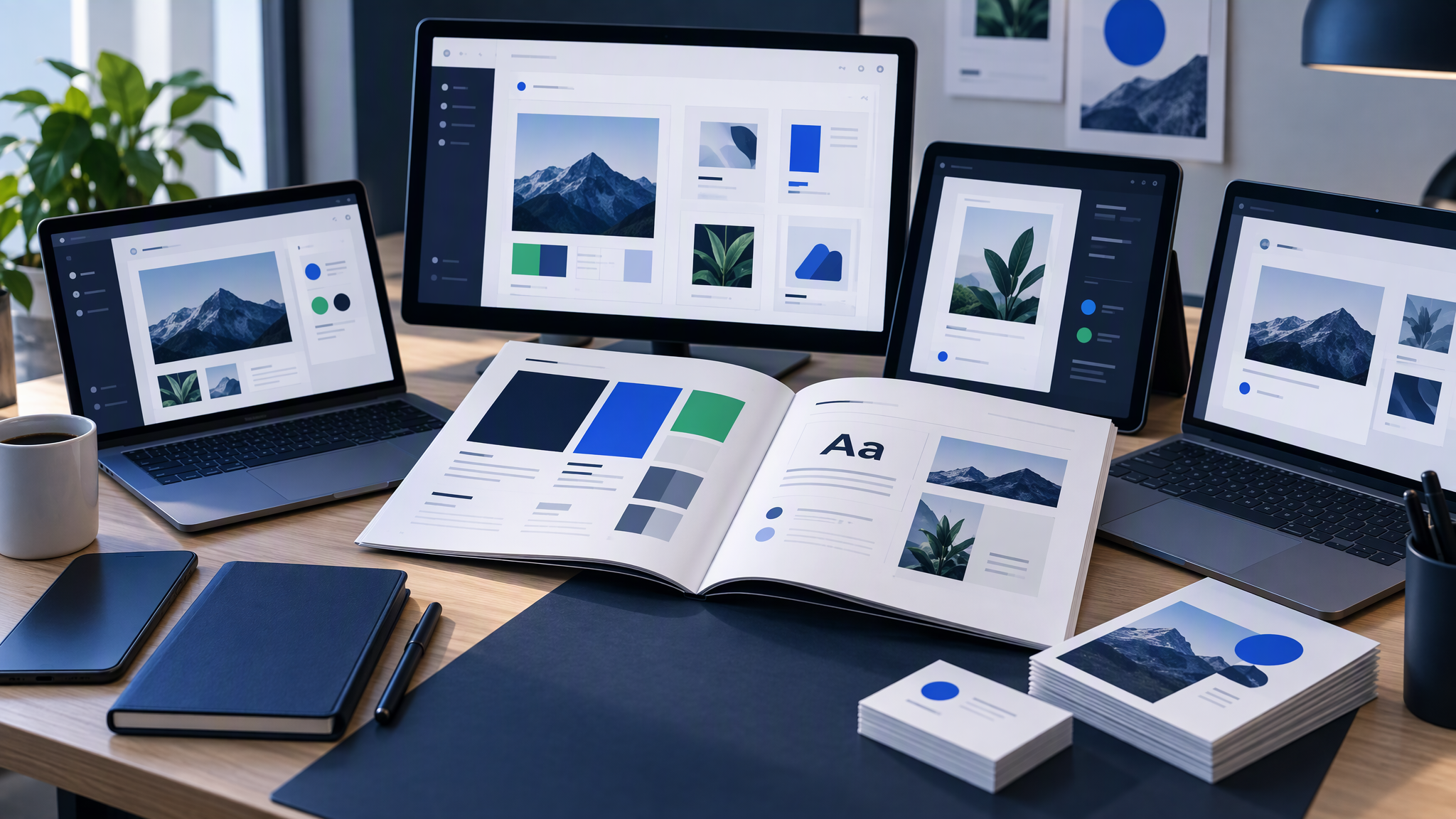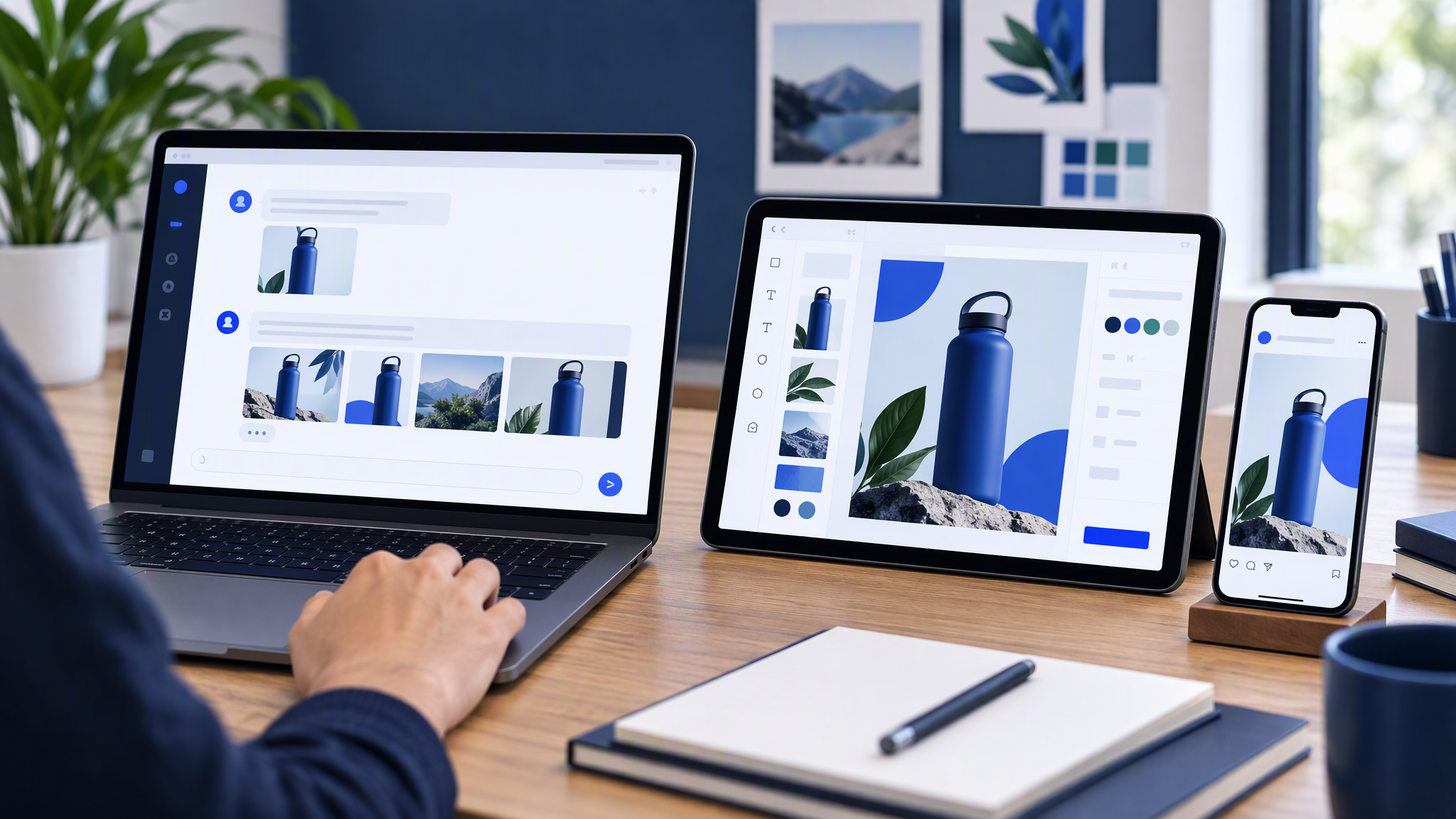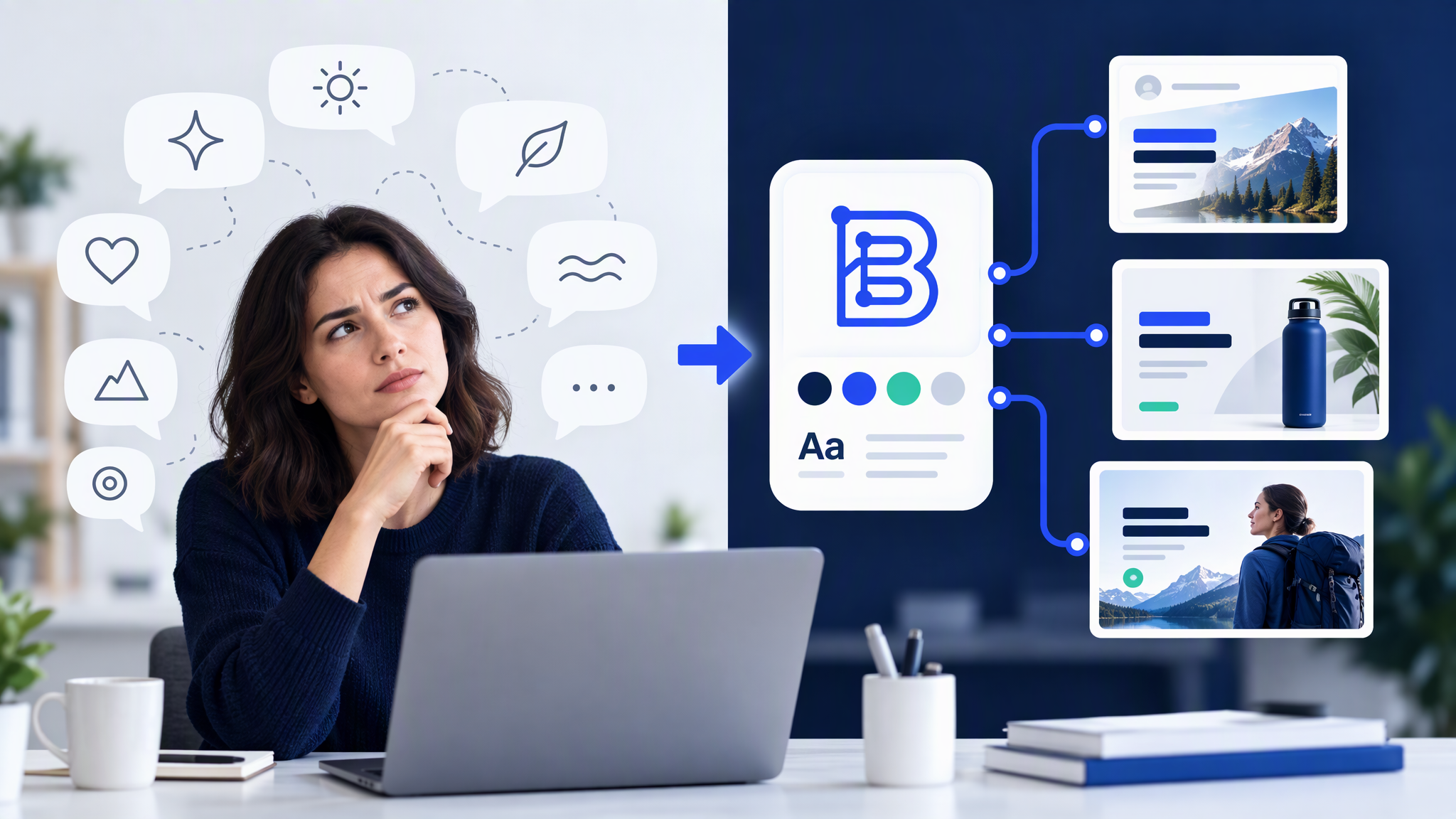
In mid-September 2026, big creative agencies made a loud point: AI agents should not invent your brand from chat vibes. They should read structured brand rules the way a careful junior designer reads a kit.
Here is the answer-ready line: Big agencies are encoding brand rules for AI agents. Small teams get most of the win by saving one brand kit and generating from it instead of re-describing the brand in every prompt.
This piece is for founders and marketing leads who keep seeing "AI agents for brand" headlines and wonder what, if anything, to copy. You will get a plain read on what shipped, why chat-only still drifts, the small-team version that actually fits an SMB week, what to ignore, and where Brandiseer fits for posts, ads, and product shots.
What shipped
On about 16 September 2026, R/GA announced BRDNA Sequencer, a product from its Global AI Products team. In plain English: it takes a brand's existing design system (components, patterns, voice, visual rules) and turns that material into structured context an AI coding agent can use while it builds and edits work.
R/GA frames this as making brand "machine-readable." The pitch is not another chatbot that stores a PDF. It is a way to configure agents so they operate with the correct components, voice, and visual assets while designers brief and review, instead of checking every output against a style guide by hand.
Coverage around the launch also stressed a platform-agnostic idea: workflows already live across many AI tools, so brand rules need to travel with the agent rather than live only inside one chat thread.
You do not need to buy an agency stack to understand the pattern. The useful idea is older than the product name: write the rules once in a form tools can apply, then stop retyping them into every prompt.
Other vendors have been pushing related "brand rules" or guardrail language for AI design and email builders. Treat those as the same family of news: identity moves out of the chat box and into something durable. Do not invent features you have not verified for your stack.
Why chat-only prompting still drifts

Chat feels like progress because answers appear fast. Brand consistency fails for boring reasons.
Every thread restarts the brand. Yesterday's careful colour list is gone when someone opens a new chat, a new tool, or a new freelancer account. The model did not forget you. You never gave it anything durable to keep.
Adjective soup is not a kit. "Warm, premium, minimal, trustworthy" means different things to different models and different people. Three approved reference images mean "match this." A paragraph of vibes means "improvise."
Volume multiplies dialects. Twenty ad options per person sound productive. Without locked colours, type, and photo mood, you get twenty near-misses that look fine alone and wrong in a grid.
Tools multiply copies. Hex codes in Notion, a Canva Brand Kit in one seat, logo PNGs in email, a Midjourney style that only one person remembers. Chat sits on top of that mess and invents a fifth version.
Review becomes taste theatre. Without a shared kit, "on-brand" means "I like it today." Two reviewers ship different dialects. An agent invents a third faster than both of them.
Agency agent news is interesting because it attacks that failure mode at expensive scale. Small teams hit the same failure mode every week with fewer people and more tools.
The small-team version (copy this)

You do not need to sequence a full enterprise design system into coding agents tomorrow. You need the 80% win that fits an SMB marketing week.
1. Save one brand kit. Logo files, colours with behaviour, fonts or a type rule, and three to five reference images. Optional: a one-page do / don't list. Details: What to Put in Your Brand Kit Before You Use AI.
2. Put the kit where production happens. A shared Brand Kit, a locked folder with clear names, or a Brandiseer profile. The kit that lives only in a personal Downloads folder is not a kit. It is a rumour.
3. Lock who can edit. One or two editors update the look. Everyone else uses it. Freelancers get access, not admin rights to invent a new primary colour.
4. Keep prompts scene-only. Ask for the subject and the channel. Let the kit carry identity. See How to Write Image Prompts That Don't Break Brand Guidelines.
5. Review grids, not single hero shots. Five assets side by side beat one lucky winner. If the set looks like cousins of your site, scale. If each file looks like a different agency, fix the kit before you buy more volume.
6. Share the kit with the whole team. In-house makers and freelancers pull from the same place. How to Share One Brand Look Across Your Marketing Team covers the access split.
That is the small-team copy of "teach agents your brand rules." You teach the tools and people you already use. You skip the theatre of pasting the brand into every chat.
What to ignore (for now)
Agency launches come with enterprise gravity. Most of it is optional for a ten-person marketing team.
Ignore full orchestration theatre. Multi-agent pipelines, custom coding-agent fleets, and agency-only configuration layers matter when you have design systems teams and large production floors. They are a distraction when you still argue about which blue is current in Slack.
Ignore buying a new category name. "Machine-readable brand DNA" is a framing. Your job is still: customers recognise the ad as you. Keep the outcome; skip the jargon.
Ignore rip-and-replace. You do not need to abandon Canva, Meta Ads Manager, or your website builder because an agency shipped an agent product. You need one kit those workflows can respect.
Ignore feature myths. Do not assume any tool "knows your brand" unless you have uploaded logo, colours, fonts, and references and checked a grid. Marketing pages move fast. Your checklist should not.
Ignore overnight automation fantasies. Agents that draft faster still need human ship gates. Speed without a kit is how you publish mismatch at scale.
Copy the principle. Rent the enterprise stack only when your volume and headcount actually need it.
Where Brandiseer fits
Brandiseer is the small-team shape of the same idea for marketing visuals: save the look once, generate posts, ads, and product shots from it, stop re-describing the brand in every prompt.
Use it when:
- You ship recurring social and paid creatives and chat-only AI keeps inventing new moods
- Freelancers or teammates each hold their own almost-current files
- Product shots and promo crops need to match the site without a studio day every week
- You want the agency-style "rules once" win without standing up a coding-agent programme
Stay manual when one person makes rare assets and happily applies the kit by hand. Add a shared generation profile when volume or headcount makes prompt restarts the default.
Brandiseer does not claim to be R/GA's Sequencer. It does not need to. The headline you should steal is simpler: encode the look once; generate from it; review the grid.
FAQ
Do we need coding agents to stay consistent?
No. Coding agents reading a design system are one path for product and design teams. Marketing teams get most of the consistency win from a shared brand kit and scene-only prompts.
Is a Canva Brand Kit enough?
It helps humans apply colours and fonts in templates. If you also generate AI images, those generations still need the same kit upstream, or chat will invent a parallel look.
Should we wait for our agency to "do agents"?
You can wait for demos and still save your kit this week. The kit helps whether the next tool is an agent, a Slack plugin, or a freelancer on Canva.
What is the fastest proof this works?
Generate five assets from the kit across feed, story, and one ad crop. Put them beside the homepage. If a stranger sees one company, you copied the useful part of the news.
Copy the rule, not the press release
Agencies are teaching AI agents brand rules because chat-only creation does not scale without drift. Small teams do not need the full press-release stack to benefit.
Big agencies are encoding brand rules for AI agents. Small teams get most of the win by saving one brand kit and generating from it instead of re-describing the brand in every prompt. Put that kit where work happens, keep prompts on the scene, and let Brandiseer hold the look when volume makes private chat threads the risky default.