On 22 September 2026, Typeface made a change that small marketing teams will feel even if they never buy an enterprise seat. Brand rules can now follow people into the chat apps they already use.
Here is the answer-ready line: Typeface's September 2026 release lets enterprise brand rules apply inside ChatGPT and Claude. Small teams copy the idea without the enterprise stack: save one brand kit, keep chat prompts to subject and scene, and approve before anything goes live.
This piece is for a marketing lead who drafts in ChatGPT or Claude and just saw a vendor wire brand rules into those same apps.
What shipped
Typeface, based in Palo Alto, described the release as the next generation of its Orchestration Engine. Three products now work as one system for enterprise customers, available from 22 September 2026.
Arc Graph is the brand-intelligence layer. Typeface says it turns brand guidelines into structured rules that its own tools, and now outside AI tools, can apply at the moment content is created. The press release names Claude and ChatGPT as the assistants that can use that intelligence. ppc.land covered the same release under the headline "Typeface carries enterprise brand rules into Claude and ChatGPT".
Arc Fabric is the orchestration layer. Typeface describes a runtime for agent work, agents tuned to how a given team works across its channels, and a shared workspace where people and agents create together. In short: team agents, not one generic bot for the whole company.
Arc Loop is the performance layer. Typeface says it pulls campaign results back in, turns them into learnings, and feeds those learnings into what agents create next. Named sources include Google Ads, Salesforce Marketing Cloud, HubSpot, Google BigQuery, Salesforce Data Cloud, and a CSV upload. Ranked variants still need a person to approve them before anything publishes. Findings are written back so the next round starts from what the last round showed.
The same materials do not publish pricing, packaging, or which chatbot plans are supported. A live walkthrough is scheduled as a webinar on 30 September 2026 at 10:00am Pacific. This post does not guess attendance, cost, or what a recording will contain.
Why it matters outside enterprise

Staff already draft in personal or team chatbots. A style guide that lives as a PDF never reaches those sessions. Someone opens a new chat, pastes a product photo, and types "make this feel like us". The model has the sentence. It does not have the logo file, the colour roles, the type rule, or the reference shots. Yesterday's thread is gone. The next person starts cold.
Vendors are pushing rules into Claude and ChatGPT because the work is already there. A guideline that never enters the chat does not govern the draft. Small teams hit the same gap. The homepage, the ad, and a late chat crop can each look fine alone and still look like two companies together. Customers do not complain about guidelines. They fail to recognise you.
Adobe put creative tools inside Slack for a similar reason, covered in Adobe Is Inside Slack Now. Here's What That Means for Your Brand. Speed in the app people already use is real. Matching still depends on a kit those sessions can apply.
What small teams should copy
You do not need Arc Graph, a parent-brand ontology, or a warehouse feed to copy the useful part. You need four habits.
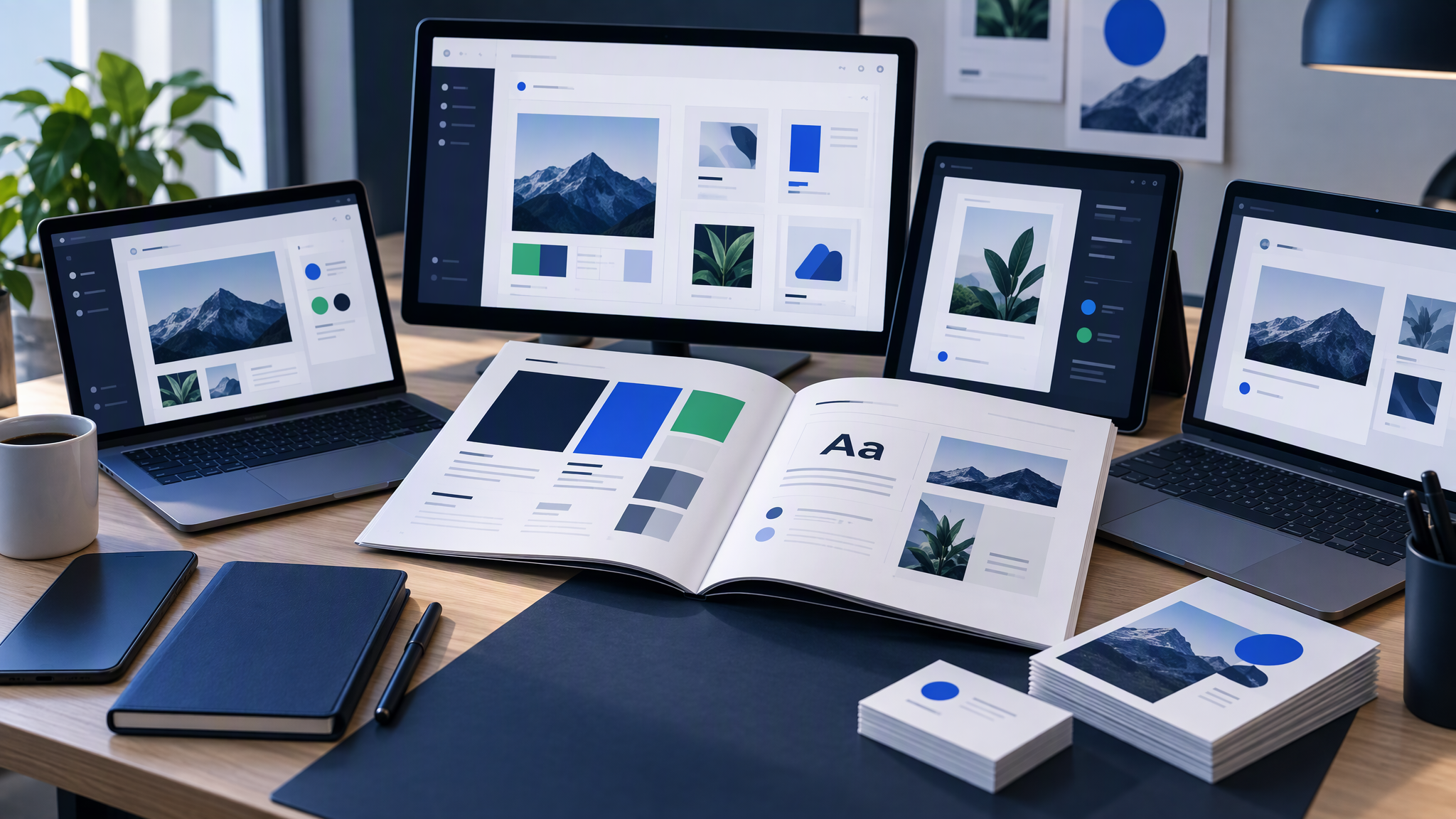
1. Save one shared brand kit. Logo files, three to five colours with a note on where each sits, fonts or a plain type rule, and a short set of approved reference images. One current location. Not three "final" folders. The checklist for what belongs in that kit is in What to Put in Your Brand Kit Before You Use AI.

2. Keep chat prompts to subject and scene. Ask for the job: "product on a kitchen counter, square crop for Instagram", "founder at a desk for a LinkedIn post", "offer layout with the product on the right". Leave colour, logo treatment, and photo style to the kit. Re-typing the brand into every thread is how the feed and the website diverge.
3. Approve before anything goes live. Typeface's own loop still requires a person to approve ranked variants before publish. Copy that gate. A pretty chat image is a draft until someone who owns the look says it can ship.

4. Run a small loop from last week into the next brief. You do not need Google Ads, HubSpot, and a warehouse wired together. Once a week, note what worked: which image got saves, which ad people clicked, which header matched the landing page. Put that note at the top of the next brief. "More of the desk crop, less of the neon badge" is a learning. A dashboard nobody reopens is not.

That is the small-team version: the kit holds the rules, the chat names the scene, a human ships, and last week shapes the next brief. If you are choosing tools around that habit, start with Best AI Tools for Brand-Consistent Marketing Images in 2026 and the AI tools hub.
What you can skip for now
Skip multi-warehouse connectors as a first project. BigQuery and a customer data cloud matter when someone already owns clean performance data. A Friday note beats a connector project that never finishes.
Skip parent and sub-brand ontologies. A house of brands needs hierarchy. One logo and one shop do not need a graph to decide which blue is current.
Skip agent runtimes. Custom agents and autonomy controls are Arc Fabric's territory. They help when many systems produce work all week. They distract while the team still argues about the logo file.
Copy the workflow. Do not quote a lift number the release did not give you.
How this differs from last week's agency news
On 24 September this blog covered a different headline: agencies teaching coding agents a design system, including R/GA's BRDNA Sequencer. That piece is Agencies Are Teaching AI Agents Their Brand Rules. What Small Teams Should Copy.
Last week the lever was a design system made usable by coding agents. This week the lever is brand rules inside general chat, where many small teams already write the caption and generate the image. The look drifts for the same reason: identity is re-typed, or never supplied, each time a session starts. Write the rules once, in a form the work can use.
If your week is posts, ads, and product shots in chat, start with the kit and the scene-only brief. The same kit still applies if you later add coding agents for the site.
Practical next step
Do this before the next chat, not after the next off-brand ad.
- Save the kit in one shared place: logo, colours, type, four to six reference images.
- Write the next chat prompt as subject and scene only. Delete any sentence that restates the brand.
- Generate a small set, not fifty finals.
- Put the homepage, the latest live ad, and the new chat image side by side. If a stranger would not call them one company, do not publish.
- On Friday, add one line about what worked to the top of next week's brief.
A shared folder and a stubborn review can carry this. If you want the kit applied when images are generated, instead of re-described in every thread, Brandiseer is one way to save logo, colours, fonts, and references once. It is optional. The habit is the point.
FAQ
Do small teams need a Typeface enterprise seat?
No. The release is for enterprise customers, and it does not publish a small-team price. Copy the workflow: one kit, scene-only prompts, human approval, and a note from last week's results.
Does Arc Graph replace a brand kit?
For Typeface customers, Arc Graph is how guidelines become rules those tools can apply, including inside Claude and ChatGPT. Everyone else still needs a kit the team can open. A PDF that never enters the chat does not do that job.
What is Arc Loop in plain terms?
Typeface says it writes campaign results, from sources such as Google Ads and HubSpot, back into the next round of creatives, with a person approving before publish. A small team can copy the idea with a weekly note.
Is this the same story as agencies training AI agents?
No. That story is about design rules for coding agents. This one is about brand rules inside the chatbots people already use. Both exist so the look stops resetting every session.
Copy the rule that fits your week
Typeface put enterprise brand rules inside ChatGPT and Claude, with Arc Fabric running team agents and Arc Loop feeding results into the next draft. Small teams get most of the win without that seat: one brand kit, scene-only prompts, approval before anything goes live, and a Friday note that changes next week's brief. A shared folder can hold the kit. So can a tool such as Brandiseer. Either way, the chat should stop inventing the brand.